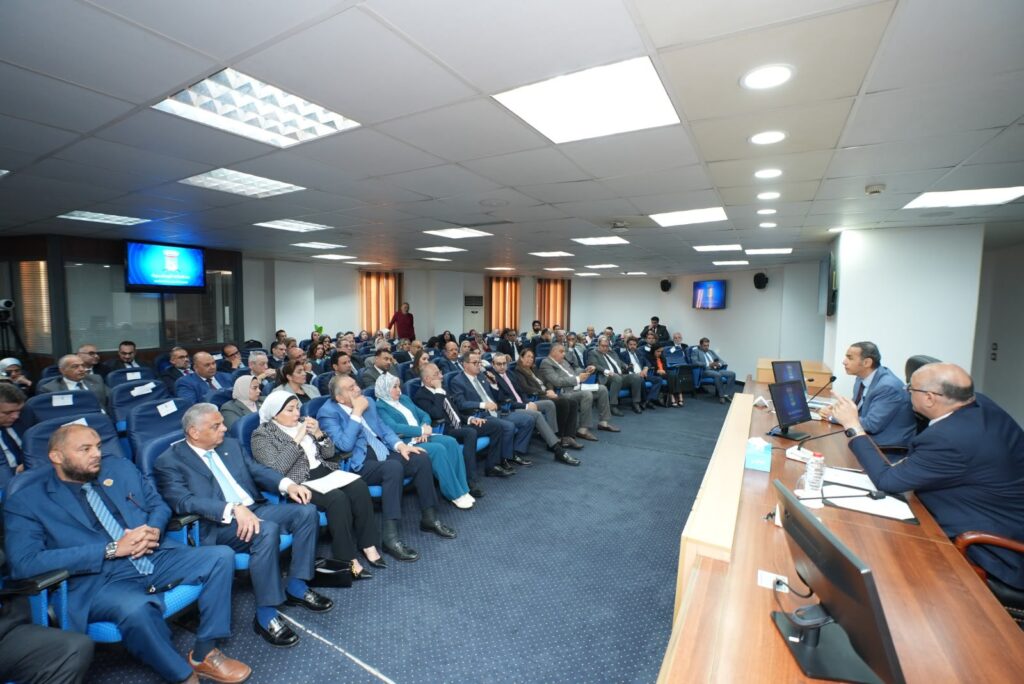
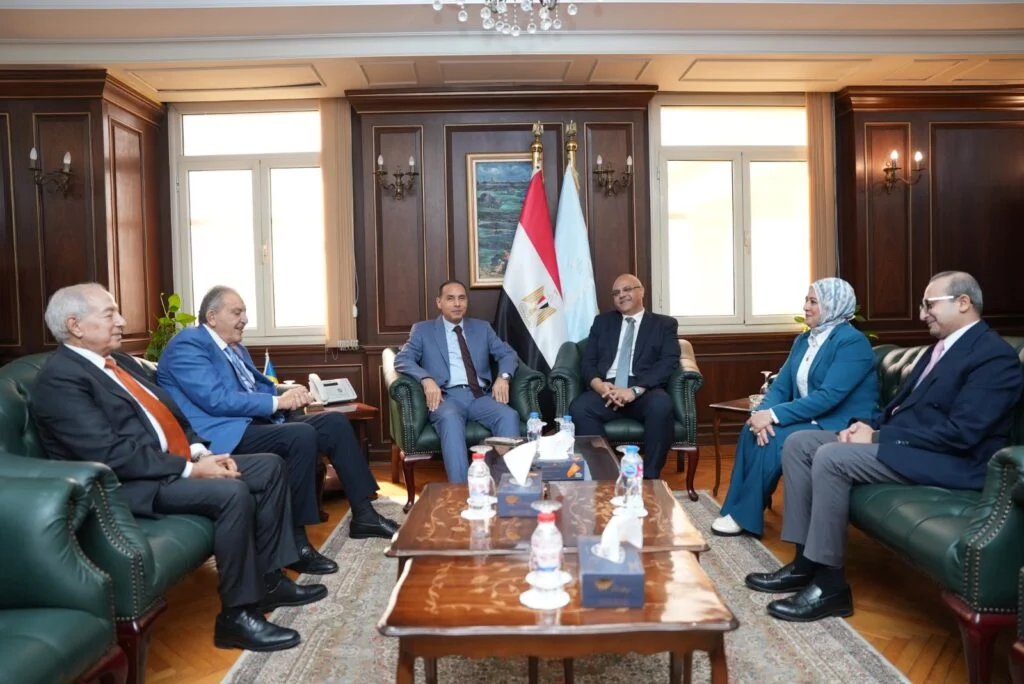
- Alexandria Governor Eng. Ayman Attia hosts FRA Chairman and leadership in a seminar reviewing the latest developments in the non-banking financial sector
- Dr. Islam Azzam discusses key challenges, opportunities to develop activities, and efforts to enhance financial awareness among Alexandria citizens with investors, company representatives, and trade unions
- FRA Chairman highlights the importance of investment funds, government IPOs, and updating Egyptian Exchange mechanisms such as derivatives market, short selling, and market making
- An open discussion on FRA decisions to raise the efficiency of capital market, insurance, and non-banking finance activities, alongside efforts to protect market participants
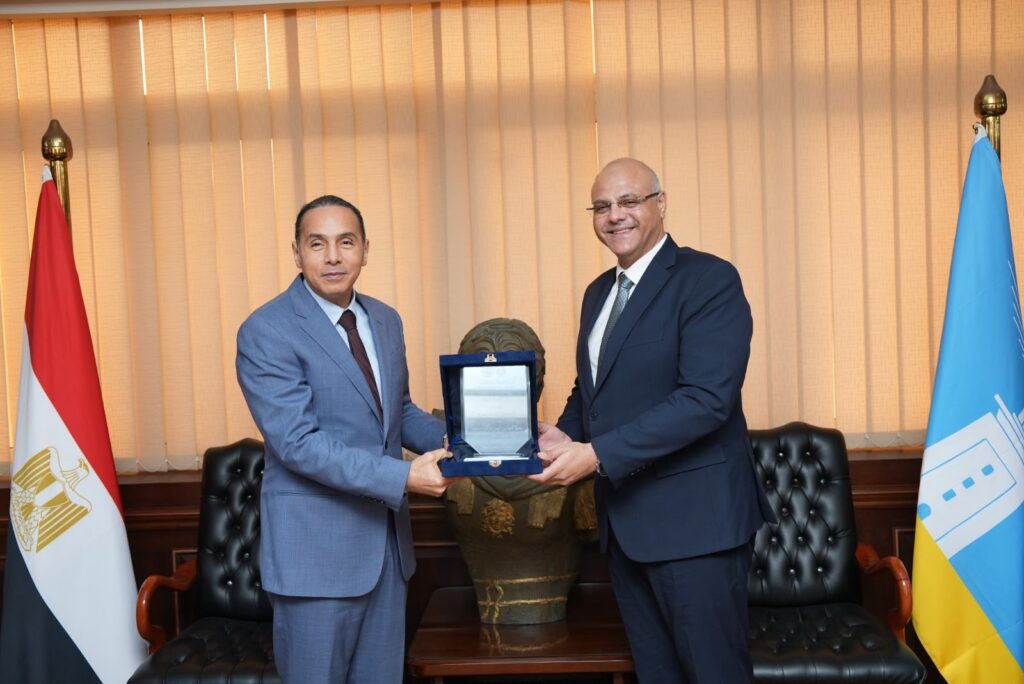
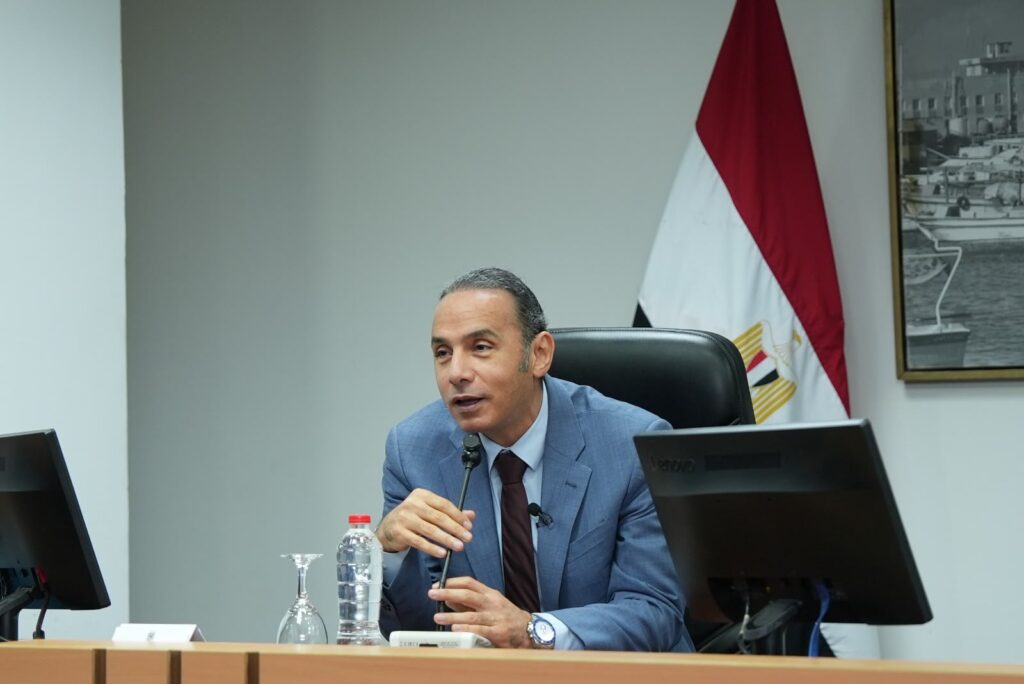
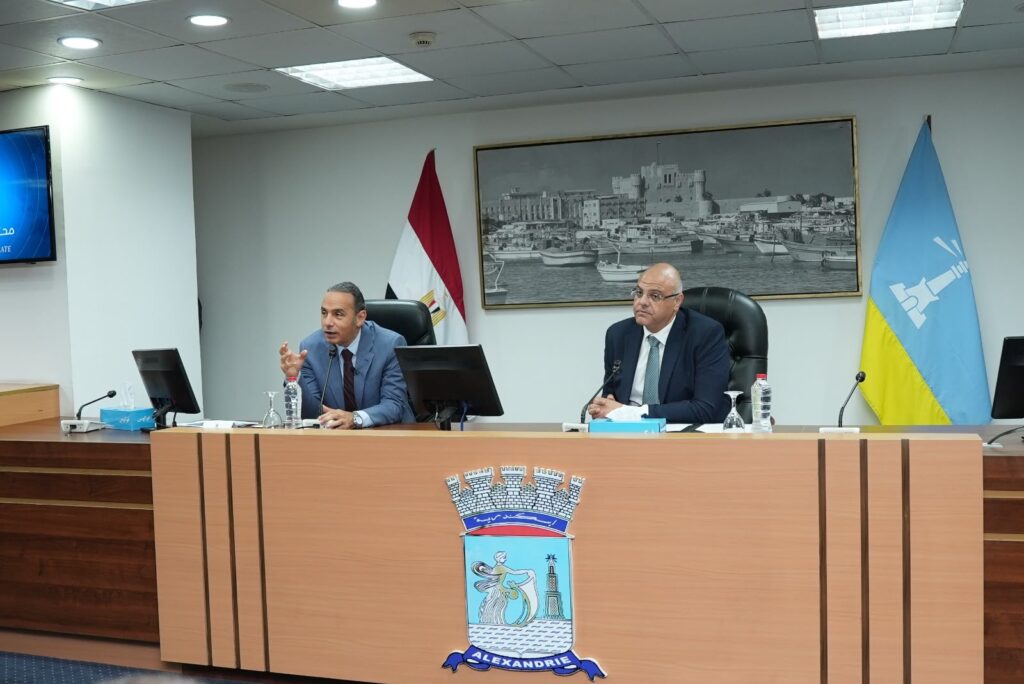
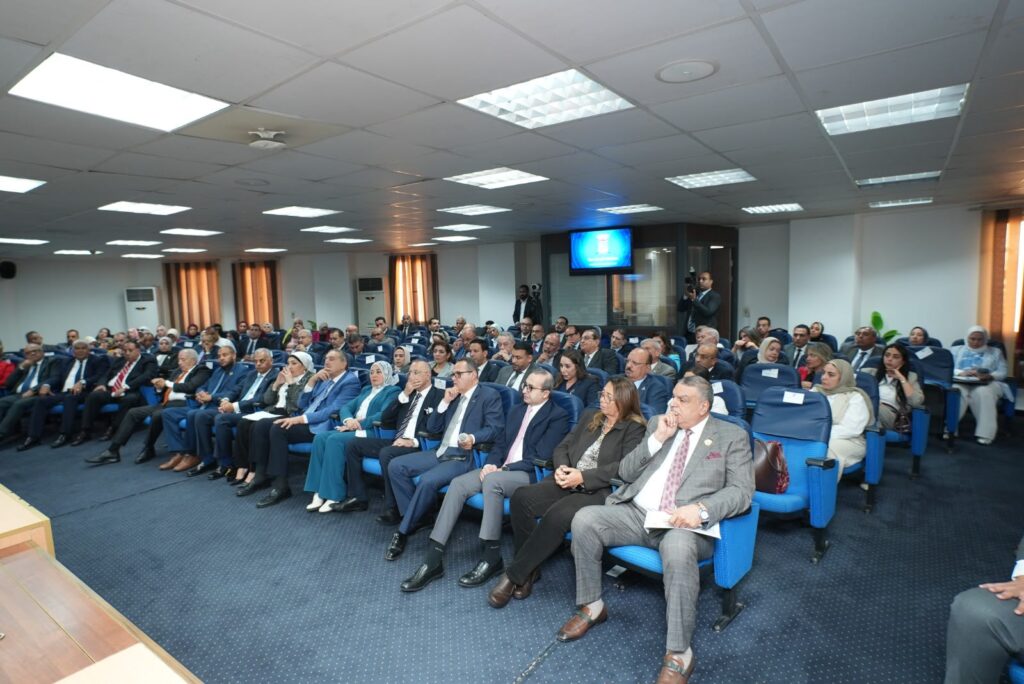
Dr. Islam Azzam, Chairman of the Financial Regulatory Authority (FRA), conducted a visit today, Thursday, to the headquarters of Alexandria Governorate. He was hosted by Governor Eng. Ayman Attia in an open meeting with a large gathering of members of the House of Representatives and the Senate, representatives of the business community, chambers of commerce, federations, companies, associations operating in the sector, and professional syndicates, to discuss prospects for expanding and deepening non-banking financial activities in the governorate, available opportunities for growth, encouraging innovation and entrepreneurship, as well as challenges facing the market and ways to address them.
This came as part of the activities of the 'Capacity Building for Enhancing Development – Know and Benefit' Conference organized by the FRA in Alexandria under the auspices of H.E. Prime Minister Dr. Moustafa Madbouly, to introduce activities subject to FRA supervision and maximize the benefit of the business community and citizens from the services and products offered.
The meeting was attended by Dr. Amira Yassen Heikal, Deputy Governor of Alexandria; Dr. Tarek Seif, Vice Chairman of the Financial Regulatory Authority; Dr. Mohamed Abdel Aziz, Mr. Mahmoud Gabriel, and Dr. Rehab Taha, Assistants to the FRA Chairman; Counselor Reda Abdel Moaty, Senior Advisor to the FRA; a number of FRA leaders specializing in supervising various activities; heads of all non-banking financial activities federations; and representatives of prominent companies and associations in the sector, especially those operating in Alexandria Governorate.
Governor Eng. Ayman Attia welcomed the visit of Dr. Islam Azzam and FRA leadership, emphasizing the importance of enhancing cooperation between the governorate and the FRA to spread financial culture and awareness, and to introduce the business community, youth, and entrepreneurs to financing and investment opportunities available through non-banking financial activities.
The Governor affirmed that Alexandria, with its diverse economic, industrial, commercial, and investment base, represents a promising environment for expanding innovative financial services and products, pointing out the importance of providing diverse financing and investment tools that help companies, especially small and medium enterprises (SMEs), to grow, expand, and create more job opportunities.
At the beginning of the meeting, Dr. Islam Azzam reviewed the most prominent regulatory developments in the capital market and investment funds, FRA efforts to modernize market tools and enhance efficiency, steps to execute new listings on the Egyptian Exchange (EGX), and the government IPOs program currently underway, which supports expanding the base of listed companies and stimulating institutional investment.
The FRA Chairman explained that the short selling mechanism will be officially launched within weeks, following the completion of live trials for the central lending system, completing the technical integration between Misr for Central Clearing, Depository and Registry (MCDR) and brokerage firms, and training market participants on dealing with the system on a trial basis. He also reviewed the regulatory framework for the mechanism issued under Board Decision No. (155) of 2026, stressing the importance of applying rules that guarantee transparency, governance, and the protection of all parties' rights.
He noted that this step comes as part of efforts to develop capital market tools following the launch of the financial derivatives market last March and the launch of futures contracts on a number of blue-chip stocks, contributing to raising pricing efficiency, increasing liquidity, and providing diverse investment alternatives for market participants.
The FRA Chairman also reviewed the upcoming market maker mechanism to be activated and its role in stimulating trading and increasing liquidity, in light of the stamp duty exemption stipulated in the recent tax package, alongside the FRA's study on granting additional incentives to encourage institutional investments, concurrently with plans to list and offer major state-owned companies on the EGX.
Regarding non-banking finance, Dr. Islam Azzam reviewed efforts to develop responsible lending rules, including enhancing reliance on behavioral analysis-based evaluation alongside credit bureau reports, assessing cash flows, and calculating debt service ratios to mitigate risks of over-indebtedness, default, and fraud. He highlighted mandating finance providers to use One-Time Passwords (OTP) to ensure client awareness and consent to the finance transaction, pursuant to FRA Decision No. (133) of 2026 scheduled for implementation before next November 11, in addition to Decision No. (27) of 2026 regarding insurance coverage for microfinance clients, prohibiting consumer finance for purchases of gold, gold jewelry, and other precious metals, and obligating companies to prepare for full integration with the FRA database to enhance early risk detection.
The FRA Chairman touched upon ongoing preparations to implement Basel III standards across the non-banking finance sector starting next January, aiming to broaden the scope of risk management to include market and operational risks alongside credit risk. He explained that the FRA is working to qualify companies and familiarize them with implementation requirements by organizing awareness programs to explain execution mechanisms, noting that some companies have already begun pilot implementation of these requirements in preparation for the set deadline.
In the context of developing supervision and protecting market participants, Dr. Islam Azzam disclosed that a bundle of regulatory and technological measures is under study, including expanding the use of artificial intelligence for data analysis and generating indicators, developing early risk detection mechanisms, studying the creation of a centralized anti-fraud platform allowing information sharing regarding fraud cases across different sectors, digitizing administrative procedures, enhancing client identity verification methods, and regulating debt collection activities to curb violations.
The FRA Chairman highlighted ongoing procedures to complete electronic integration with companies under its supervision, enabling the provision and analysis of daily and real-time data from various non-banking financial activities using AI technologies. Part of these analytical findings will be shared with the market to help companies make more efficient decisions and develop insurance and financing products tailored to actual client needs.
Regarding the insurance sector, he emphasized the importance of providing full information to market participants about insurance and financing products and investment vehicles, clarifying their rights and obligations, protecting their data, and providing effective mechanisms for complaints and appeals, as foundational pillars for developing activities and strengthening trust in them.
He also stressed the necessity of encouraging product innovation using financial technology (FinTech) and expanding access to services, especially in underserved and remote areas, in parallel with ongoing awareness efforts and cooperation with various government bodies.
The meeting addressed the importance of raising awareness about safe investment channels under FRA supervision, the latest of which are diversified investment funds and digital platforms dedicated to real estate funds, geopolitical challenges impacting capital market performance and state efforts to absorb them to ensure market stability and increase its attractiveness, ongoing coordination with the Ministry of Finance and the EGX to enhance trust between tax authorities and the business community, and the desired positive impacts of the recent tax facilitation package.
The 'Capacity Building for Enhancing Development' Conference, with its public activities in Alexandria, reflects the Financial Regulatory Authority's direction toward enhancing communication with state institutions and business community representatives across governorates, developing non-banking financial markets to achieve a balance between supporting growth and investment, elevating service quality, protecting participants' rights, and maximizing the sector's contribution to the national economy.