
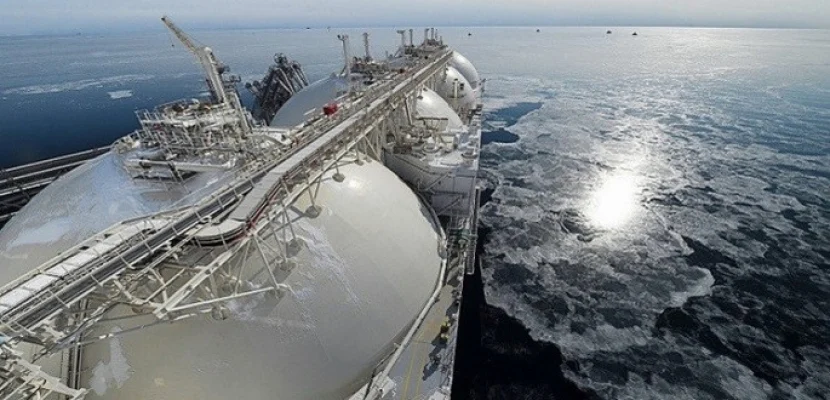
Al Arabiya Net _ Egypt has agreed to receive around 42 liquefied natural gas (LNG) shipments during the fourth quarter of 2026, at an estimated cost of nearly $2.5 billion, as part of governmental moves to secure the domestic market's energy needs and bridge the supply gap between local production and consumption, according to an official source.
The source told "Al Arabiya Business" that the shipments targeted for import between October and December will provide supplies ranging from 2 billion to 2.2 billion cubic feet per day, to be delivered under a flexible schedule taking into account domestic demand developments and gas consumption rates in the electricity and industrial sectors.
Average Cargo per Shipment Stands at Around 150,000 Cubic Meters
He explained that the average cargo of a single shipment stands at approximately 150,000 cubic meters of LNG, noting that the new contracts aim to ensure the continuity of fuel flows to conventional power plants and energy-intensive factories, and to mitigate the risks of supply shortages during the remainder of the year.
The source estimated the cost of procuring the shipments at nearly $2.5 billion, amidst the rise in LNG prices in global markets to over $25 per million British thermal units (MMBtu), driven by regional tensions and crises and their impact on supply and demand balances.
These levels exceed double the average prices recorded during the corresponding period of last year, when prices hovered around $12 per MMBtu, raising the cost of securing the required quantities to cover domestic market needs and increasing pressure on the petroleum import bill, according to the source.
The United States is the Main Supplier of the New Shipments Alongside Quantities from Mauritania and Other International Markets
The source noted that the United States will be the main supplier of the new shipments, alongside quantities from Mauritania and other international markets, as part of a policy to diversify supply sources, reduce the risks of relying on a single supplier, and enhance the energy system's resilience in the face of geopolitical fluctuations and global market disruptions.
He stated that the importance of LNG imports is highlighted given Egypt's reliance on gas in the electricity generation system and the operation of energy-intensive industries, making the high import cost an influential factor in the production cost of electricity and industrial goods, according to fuel pricing mechanisms and cost-pass-through within the economy.
Imports Decrease by 20 Shipments Compared to the Third Quarter
The source reported that the LNG import plan during the fourth quarter decreases by about 20 shipments compared to the third quarter of this year, which witnessed an increase in requirements during the peak summer consumption, with demand for gas allocated to electricity generation declining relatively as loads associated with high temperatures recede.
He added that the reduction in the number of shipments is linked to estimates of actual requirements during the fourth quarter, in light of the stability of gas flows from other sources, including domestic production and imports arriving via pipelines from Israel.
He stated that this step reflects a trend toward aligning foreign purchases with the seasonal demand curve, helping to curb the import of quantities exceeding actual needs and reduce supply, storage, and regasification costs, while maintaining adequate fuel levels to avoid any supply bottlenecks.
According to the source, the Ministry of Petroleum and Mineral Resources covers up to 45% of the market's needs through pipeline gas imports and LNG shipments during peak periods, with supplies primarily directed to the electricity and industrial sectors, including the fertilizer and petrochemical industries.
Daily Demand for Natural Gas in Egypt Reaches Around 7 Billion Cubic Feet
Egypt currently produces around 3.8 billion cubic feet of natural gas per day, while consumption approaches 7 billion cubic feet per day during October, rising to between 7.2 billion and 7.4 billion cubic feet per day during the summer peak, according to the source.
Daily Gap Between Production and Consumption Stands at Around 3.2 Billion Cubic Feet
He pointed out a daily gap between production and consumption of approximately 3.2 billion cubic feet during October, which may rise to between 3.4 billion and 3.6 billion cubic feet per day during the summer months, prior to accounting for variations in import flows and supply distribution across consumption sectors.
The source stressed that the government is working, in parallel with external contracts, to enhance fuel supplies to power plants and industrial sectors by developing existing fields and accelerating exploration and development programs, thereby supporting domestic production stability and limiting the widening of the supply gap.