
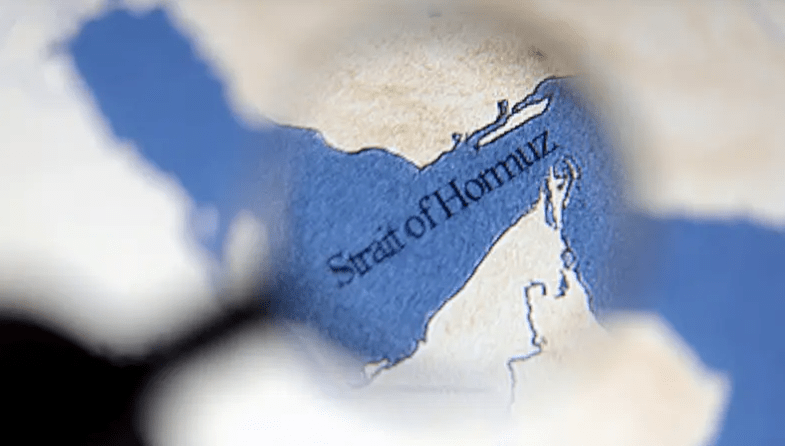
Al Arabiya Net _ On the map of global trade, not all maritime routes are created equal. Strategic chokepoints control the flows of energy and goods between continents, led by the Strait of Hormuz, the Bab al-Mandab Strait, and the Suez Canal.
These waterways hold exceptional importance because they carry a significant portion of oil, gas, and goods moving between Asia, Europe, and the Americas, making any disruption capable of driving up oil, freight, and insurance prices within hours.
With escalating geopolitical tensions in recent years, markets have realized that risks are not limited to supply halts alone, but also include soaring transport costs, ship rerouting, and global supply chain disruptions. Consequently, these straits have become key indicators monitored by investors, energy companies, and shipping lines to gauge price trends, inflation, and global economic growth.
The Strait of Hormuz: The World's Primary Energy Artery
The Strait of Hormuz is the most critical energy passage worldwide, connecting the Arabian Gulf with the Arabian Sea and the Indian Ocean. According to the U.S. Energy Information Administration (EIA), average oil flows through the strait reached approximately 20.7 million barrels per day in 2024, rising to 20.9 million barrels per day during the first half of 2025, which represents about one-fifth of global petroleum liquids consumption.
25% of Global Seaborne Oil Trade Passes Through Hormuz
The strait's importance is not confined to crude oil alone; International Energy Agency data indicates that roughly 25% of global seaborne oil trade transits through it.
19% of Global LNG Trade Passes Through Hormuz
It also handles liquefied natural gas (LNG) exports originating from Qatar and the UAE, representing about 19% of the global LNG trade.
Despite the existence of some alternatives, such as the Saudi East-West Pipeline to the port of Yanbu and the Abu Dhabi Pipeline to Fujairah, alternative capacity remains limited compared to the massive volumes transiting the strait daily, making any disruption an immediate concern for global markets.
Bab al-Mandab: The Southern Gateway for Asia-Europe Trade
Located between Yemen and the Horn of Africa, the Bab al-Mandab Strait serves as the mandatory passage for vessels traveling from the Indian Ocean to the Red Sea and on to the Suez Canal. The strait's significance lies in connecting trade and energy traffic between the Gulf and Asia on one side, and Europe on the other.
U.S. EIA data reveals that around 4.1 million barrels per day of oil and petroleum liquids transited Bab al-Mandab during 2024, compared to 9.3 million barrels per day in 2023 prior to the escalation of Red Sea disruptions.
Waterways Linked to Bab al-Mandab and the Suez Canal Account for 12% of Global Seaborne Oil Trade and 8% of LNG Trade
Furthermore, passages linked to Bab al-Mandab and the Suez Canal account for approximately 12% of global seaborne oil trade and 8% of global LNG trade.
The Red Sea crisis proved that any threat to navigation in the strait forces shipping companies to seek alternative routes, which rapidly reflects on freight and insurance rates while increasing pressure on global supply chains.
The Suez Canal: The Shortest Route Between East and West
The Suez Canal stands as one of the most vital arteries of world trade, connecting the Red Sea to the Mediterranean and offering the shortest maritime route between Asia and Europe. Data indicates that the Canal accounts for roughly 12% of global trade, making it a pivotal element in container, energy, and cargo movements between continents.
Suez Canal Accounts for Approximately 12% of Global Trade
The Canal's significance lies in its ability to save thousands of nautical miles compared to the Cape of Good Hope route, reducing transit times, fuel consumption, and operational costs. For this reason, any decline in maritime traffic through the Red Sea directly impacts the Canal, its revenues, and the ports and logistical services linked to it.
The Canal suffered notable losses during the Red Sea crisis, as transiting vessel numbers dropped sharply. Recent data indicates that Egypt lost around $7 billion in Suez Canal revenues between 2023 and 2024, after revenues had reached a record high of $10.2 billion in 2023.
When these waterways become insecure, shipping lines resort to circumnavigating South Africa via the Cape of Good Hope. However, this option carries substantial additional costs. According to the United Nations Conference on Trade and Development (UNCTAD), vessel traffic along this route surged by 89% during the Red Sea crisis, leading to longer voyage times, higher fuel consumption, increased emissions, and elevated operating costs.
U.S. EIA data further illustrates that an oil tanker voyage from the Gulf to Northern European ports takes about 19 days via the Suez Canal, but can extend to 35 days via the Cape of Good Hope. This increase translates directly into higher fuel expenses, crew wages, insurance premiums, and final freight rates.
UNCTAD estimates that a large container ship carrying between 20,000 and 24,000 TEUs between Asia and Europe could incur approximately $400,000 in additional emissions costs per voyage when taking the African route instead of the Suez Canal.
Arab economies benefit directly from the stability of these waterways, whether through Gulf energy exports or transit revenues and logistics services in Egypt and Red Sea nations. Regional ports also rely on the continuation of East-West trade flows, making any disruption to these routes impactful on economic activity, investment, and government revenues.
Hormuz, Suez, and Bab al-Mandab may appear as narrow lines on a map, but in reality, they are essential keys to the global economy. These chokepoints carry millions of barrels of oil daily, thousands of ships annually, and a significant portion of international trade. Therefore, any crisis within them does not remain geographically confined; its impact extends to energy prices, inflation, and economic growth worldwide.