
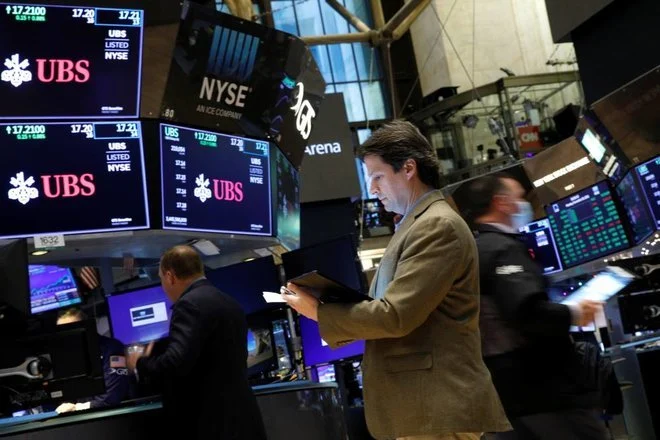
CNBC_ US indices rose during Tuesday's trading session, with the Dow Jones Industrial Average climbing 618 points, or 1.2%, supported by a series of strong earnings reports that overshadowed the pressures surrounding artificial intelligence stock trading.
The S&P 500 Index rose by 0.7%, while the Nasdaq Composite Index increased by 0.6%.
Safety products company shares rose by more than 4%, following the announcement of earnings that exceeded expectations and the company's upward revision of its annual forecast. Additionally, shares of aerospace and defense companies Northrop Grumman and RTX rose by 6% and 1% respectively, following better-than-expected quarterly results.
Oil prices retreated from their early gains, supporting investor sentiment in the market, as US West Texas Intermediate crude futures rose by 0.3% to about $104 per barrel, while Brent crude futures fell by 2% to approximately $107 per barrel.
Markets have recently faced pressures due to concerns regarding the sustainability of the artificial intelligence boom, amid growing anxiety over debt levels and demand.
Furthermore, sentiment in the technology sector suffered an early blow after shares of Korean artificial intelligence specialist Elice plunged by more than 30% during its public market debut, contributing to a decline in Asia-Pacific markets, particularly the South Korean market.
Artificial intelligence-related stocks recovered part of their losses as the trading session progressed, with shares of Micron Technology, Intel, and Sandisk rising by about 1% each.
Additionally, Seagate Technology shares increased by 2%, Advanced Micro Devices shares rose by more than 1%, while the VanEck Semiconductor ETF added about 1%, and CoreWeave shares advanced by more than 2%.
US markets posted gains in Monday's session, with the S&P 500 Index rising by 0.4% and the Nasdaq Composite Index climbing by more than 1%.
Nvidia shares also increased by 1.4%, Tesla shares jumped by 3.8%, while Alphabet shares rose by about 1%.
These movements represented a rebound from the sharp sell-off witnessed in the markets last week, which extended to broader sectors amid escalating concerns over companies resorting to excessive borrowing to finance their investments in artificial intelligence infrastructure.
Jose Torres, Chief Economist at Interactive Brokers, stated that the improved outlook for modern technology prospects provided Wall Street with a degree of relief, as investors stepped back from hedging positions following the sharp surge in volatility protection costs during last Friday's session and prior to the intensification of selling operations.
CoreWeave stock, which lost more than 25% of its value last week, attempted to recoup some of its losses after Goldman Sachs upgraded its recommendation for the stock to a "Buy", but the early gains faded before the close, ending the session down slightly.
Investor concerns regarding CoreWeave's creditworthiness heightened, with the spread on five-year credit default swaps rising once again to levels close to those recorded last Thursday.
Credit default swaps are used as a tool allowing buyers to obtain protection in the event that a borrower fails to meet its financial obligations.
The spread for these contracts rose to more than 1,121 points, an increase of 2.22% during Tuesday's trading, and by more than 17% over the past week.
Levels of 1,000 points or more in credit default swap spreads are considered a general indicator of a company's exposure to pressure or distressed financial conditions.