
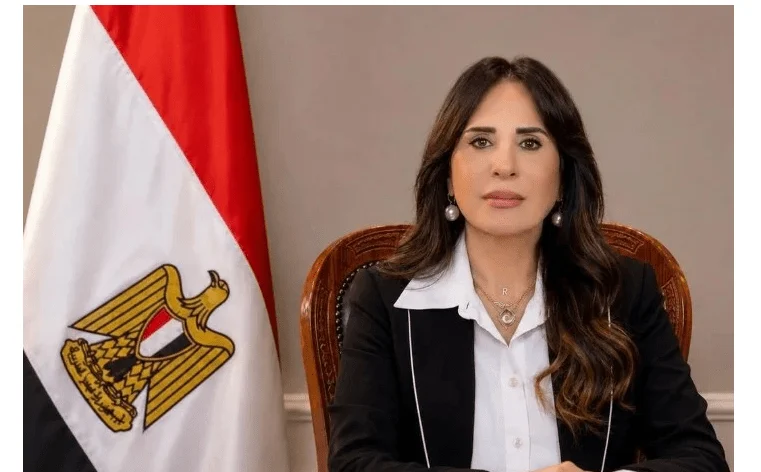
Habi_ Engineer Randa El-Menshawy, Minister of Housing, Utilities, and Urban Communities, reviewed—in the presence of President Abdel Fattah El-Sisi during the "Urban and Community Development" session within the "Egypt 2026 Forum"—the Egyptian state's efforts to achieve comprehensive urban development from 2014 to 2026. She highlighted the developments witnessed in the files of housing, new cities, utilities, infrastructure, and urban area development, alongside the targets for the upcoming phase, and listened to the opinions of experts and participants in the forum.
The session commenced with the screening of a film reviewing the challenges faced by the Egyptian state since 2014 and the implications of deciding to initiate comprehensive urban development, which contributed to increasing the inhabited area of the Egyptian state from 7% to 14%.
In her speech, the Minister of Housing emphasized that the housing and urban development file is at the forefront of the state's developmental priorities due to its direct link to citizens' lives, their right to adequate housing, and the improvement of their quality of life. She pointed out that the state's vision was based on two integrated tracks: the first is developing existing urban areas and upgrading the level of services, and the second is establishing new urban communities that accommodate population growth, redistribute population densities, and open new horizons for development and investment.
The Minister of Housing explained that Egypt's inhabited area increased from about 7% in 2014 to about 14% by 2024, with continuous expansion of the inhabited area within the framework of the state's efforts to expand the urban expanse and achieve a balanced distribution of development opportunities through the National Strategic Plan for Urban Development.
The Minister reviewed the state's efforts in developing informal and unsafe areas, explaining that the development of 342 unsafe areas across 25 governorates has been completed, comprising about 246,000 housing units. Nearly 1.2 million citizens benefited from these projects, with total investments estimated at approximately EGP 63 billion, including areas such as Zereeb Mayyada, El-Duqaika, Manshiyat Naser, and Tel El-Aqarib, culminating in the announcement of Egypt being completely free of unsafe areas.
She added that development efforts extended to unplanned areas, which cover an area of about 152,000 feddans. The development of 16.5 thousand feddans has been completed by improving road networks, utilities, and services, and upgrading the urban environment, alongside developing and reviving historical and cultural areas, such as Khedivial Cairo, Islamic Cairo, the Amr Ibn Al-Aas Mosque square, and Fustat Hills Park, in addition to the "Great Transfiguration" project on the land of peace in Saint Catherine city.
Engineer Randa El-Menshawy emphasized that the true impact of urban development projects is not measured solely by the number of units established, but rather by the extent of improvement achieved in families' lives and the provision of a safe residential environment with integrated services, thereby enhancing family stability and preserving the dignity of citizens.
Regarding utilities and infrastructure projects, Engineer Randa El-Menshawy explained that drinking water and sanitation projects were executed and completed during the period from 2014 to 2026, with total investments amounting to EGP 635.1 billion.
She noted the execution of 522 drinking water purification projects, raising production capacity to 45 million cubic meters per day, and bringing the coverage rate of drinking water services nationwide to 99% in 2026, compared to about 95% in 2014.
Furthermore, 237 wastewater treatment projects were executed, raising the design capacity to 19 million cubic meters per day, and bringing the wastewater services coverage rate to 70% in 2026, compared to about 50% in 2014, with a target to achieve full coverage of the republic upon the completion of the three phases of the presidential initiative "Decent Life" (Haya Karima).
The Minister of Housing pointed out the increase in the number of seawater desalination plants from 36 plants with a capacity of 84,000 cubic meters per day in 2014, to 129 plants with a total capacity of 1.4 million cubic meters per day.
In the field of roads, Engineer Randa El-Menshawy noted the execution of 610 projects with total lengths of about 6,500 kilometers and a cost of EGP 94.8 billion through the Central Agency for Reconstruction. These included national, primary, and internal roads in the governorates, notably the 15-kilometer الفريق كمال عامر Axis in Giza Governorate, the 20-kilometer New Borg El Arab Airport connection axis to the Alexandria/Cairo Desert Road, and the 4.5-kilometer Amr Ibn Al-Aas Axis.
The Minister added that it is no longer possible to face urban and demographic challenges by developing existing cities alone, or by leaving these challenges to exacerbate without expanding the establishment of new urban communities capable of absorbing population growth and providing new opportunities for investment, production, and services.
She explained that the establishment of fourth-generation cities came as an embodiment of this vision, most notably the New Administrative Capital, New Alamein, New Mansoura, Hadayek El-Osema, New Suez, New Nasser, New October, and other modern cities spread across various parts of the republic, contributing to supporting the state's efforts to redraw the map of urban development, create new centers for economic growth, and achieve balanced development nationwide.
The Minister of Housing emphasized that new cities represent one of the main pillars for achieving balanced urban development, explaining that the number of new cities has reached 39 cities, in addition to 13 urban communities, with an expansion in the establishment of integrated communities relying on modern infrastructure, advanced communication networks, and more efficient planning of utilities and services.
She added that the population of the new cities increased from about 4.8 million inhabitants in 2014 to about 15 million inhabitants, while the lengths of roads in these cities increased from about 8,000 kilometers to about 18,000 kilometers in 2026.
Engineer Randa El-Menshawy explained that to enhance the attraction factors of new cities, achieve integration between urban development and productive activities, contribute to attracting local and foreign investments, and provide job opportunities, the new cities and their strategic plans were supported by allocating industrial zones within the master plans of a number of cities—accounting for 31 new cities comprising about 36 industrial zones, with a total area of about 96,000 feddans, housing 20,041 factories.
She pointed out that the cost of utilities in the new cities over 12 years amounted to EGP 357.7 billion. Additionally, 10% of the proceeds from the sale of unallocated units and land for social housing programs—equivalent to approximately EGP 3.67 billion annually—is directed to the Social Housing and Mortgage Finance Fund to support the provision of units for low- and middle-income brackets, in accordance with the Social Housing Law No. 93 of 2018.
In the housing file, the Minister confirmed that the state adopted a diverse policy to provide housing units that suit the needs of various segments of society and their economic capabilities, pointing out the execution of 1.96 million housing units during the past period and up to the present through entities affiliated with the Ministry.
She explained that low-income units represent about 56% of the total executed units, while middle-income units represent 12%, luxury housing 7%, and diverse housing 25%.
She added that the number of units under social housing programs reached about 1,073,118 units, of which 884,698 units are fully executed and about 182,380 units are under execution, with an investment cost of about EGP 241 billion, excluding the cost of public utilities and the value of land usufruct.
She noted the provision of mortgage finance at a reduced return rate to beneficiaries amounting to approximately EGP 115.5 billion through 23 banks and 8 mortgage finance companies, alongside supporting the return on mortgage finance by EGP 29 billion, and disbursing direct cash support exceeding EGP 10.6 billion.
She confirmed the continuation of the state's efforts to diversify housing programs and provide multiple options for citizens, including social housing, middle-income housing, and upper-middle housing, alongside subsidized rental systems with 15,000 units within the "Sakan Koll El-Masryeen 9" (A Home for All Egyptians 9) announcement, rent-to-own systems with 10,000 units through the New Urban Communities Authority, and expanding partnerships with the private sector to execute housing units that suit citizens' needs and their economic and social conditions.
She added that the presidential initiative "Sakan Koll El-Masryeen" contributed to enhancing access to adequate housing, where 5% of the offered units were allocated to persons with disabilities, the percentage of female beneficiaries reached 24% of the total offered units, while the percentage of freelance workers reached 34% of the total beneficiaries.
Engineer Randa El-Menshawy concluded her speech by pointing out that true success in the housing file lies in providing adequate housing at an affordable cost within a community equipped with services and opportunities for a decent life, emphasizing that the goal is not limited to increasing the number of housing units, but extends to expanding access to safe and adequate housing, thereby enhancing family stability and preserving the citizen's dignity.