
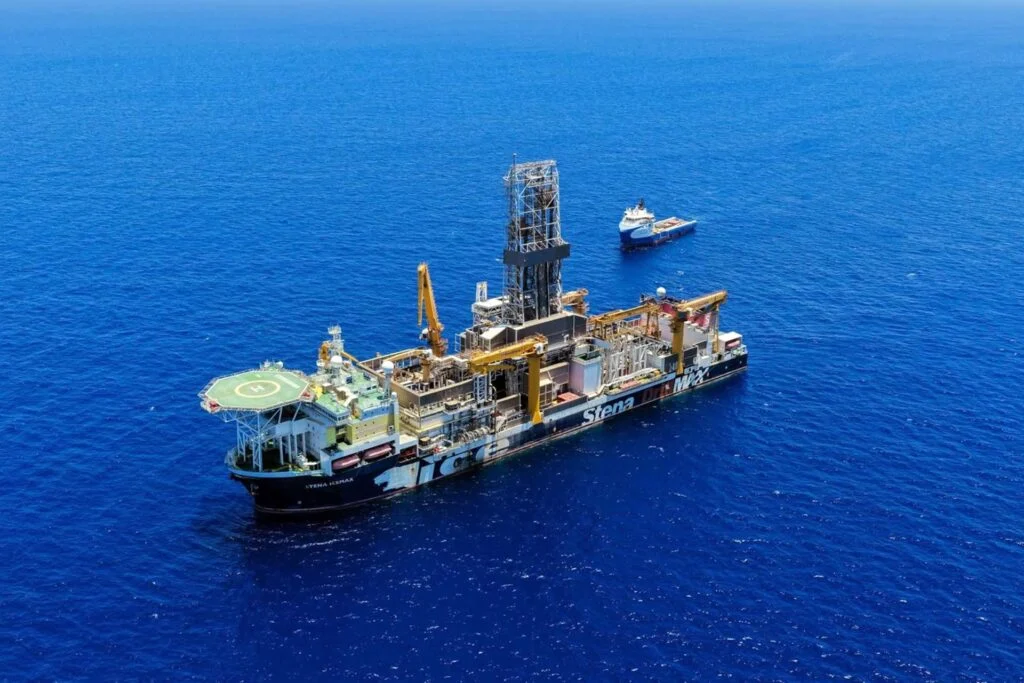
The Ministry of Petroleum aims to drill 14 new exploration wells in the Mediterranean by the end of the current fiscal year, with potential reserves of up to 12 trillion cubic feet of gas, according to two government officials speaking to Enterprise Morning. These wells are part of a broader campaign targeting the drilling of 101 wells in cooperation with international companies, and coincide with the launch of the first phase of the new marine seismic survey next November.
Drilling Map: The Western Desert accounts for the largest share of drilling operations, with 67 wells out of the total 101. It is followed by the Mediterranean with 14 offshore wells, the Gulf of Suez with 9 wells, the Nile Delta with 6 wells, and finally the Eastern Desert with 5 wells. This program is part of a USD 5.7 billion plan targeting the drilling of 480 exploration wells over 5 years, which the Ministry later expanded to include 580 wells by 2030. The plan, agreed upon with the government, aims to achieve self-sufficiency in petroleum products by 2029 and completely halt imports by 2030, according to one of the officials. The source explained that the Western Desert contributes approximately 18% of Egypt's crude oil production and still holds promising undiscovered reserves.
Participating Companies and Drilling Locations: Pharos Energy, the joint venture between BP and ADNOC’s XRG, intends to drill the North 6 well as well as the Atoll well, located in its wholly-owned North Damietta concession area. Meanwhile, Shell is preparing a well in its Marsa Matruh concession area, according to the two officials. They also added that ExxonMobil plans to start drilling in the Cairo concession area during the first quarter of 2027, after having looked forward to starting in the first quarter of 2026 since early last year.
The seismic survey is expected to help determine the locations of the next round of drilling. The Ministry clarified in a statement that the first phase of the survey will cover an area of approximately 18,000 square kilometers. This phase relies on Ocean Bottom Node (OBN) seismic survey technology, which places sensors directly on the seabed to obtain clearer images of subsurface rock formations. Likewise, the Egyptian Natural Gas Holding Company (EGAS) is managing this program in cooperation with the consortium comprising SLB and Viridien, which won last year's tender to conduct a survey covering up to 95,000 square kilometers of Egyptian waters in 3 phases over 7 years. The cost of the first phase is USD 117 million. Following data processing, it will be converted into investment opportunities presented to international companies, according to Minister of Petroleum Karim Badawi.
Survey vessels have already begun to arrive; the research vessel Commander has docked at Port Said, and two other vessels are scheduled to join it. Work will begin in the- West Dikirnis and Ras El Bar areas, continuing there until the end of 2026, while the consortium is still completing arrangements for the next phase of work for 2027, according to the statement.
In context: The underlying reasons for this urgent move are clear and straightforward. Domestic gas production declined from approximately 59 billion cubic meters in 2023 to 42 billion cubic meters in 2025, a 29% decrease, while crude oil production declined by about 10%. The cost of gas imports reached USD 7.9 billion last year, with another USD 2.5 billion added in the first quarter of 2026 alone, and the bill is expected to jump by 26% during the current fiscal year. The government aims to reduce it by about USD 500 million monthly, as the two officials confirmed. One of the officials explained that adding about 90 million barrels to crude oil production could reduce its import bill by between USD 1.5 billion and USD 2.3 billion annually, although high gas prices have prompted increased reliance on mazut for power generation at present.
Time is running out for existing fields: Current fields are losing about 120 million cubic feet of their production monthly due to natural decline, and the five wells scheduled to come on stream in October are expected to add only about 100 million cubic feet per day, as we mentioned last August.
Mediterranean project enters production: Eni has started operating the second phase of the gas processing plant project in the Meleiha area in the Western Desert, through Ajeeba Petroleum Company, a joint venture between Eni and the Egyptian General Petroleum Corporation (EGPC), according to the Ministry's statement. The second phase includes development wells, gathering networks, and a new gas export pipeline, enabling the plant to process up to 100 million cubic feet per day. Total production from the region is expected to reach approximately 125 million cubic feet per day during the current fiscal year.
Successful exploration activities could add between 1.5 billion and 2 billion cubic feet per day to domestic production over the next three years, returning production to a level close to 7 billion cubic feet per day, according to one of the officials. The Mediterranean alone is expected to raise offshore production to about 2 billion cubic feet per day, compared to 1.5 billion cubic feet currently.