
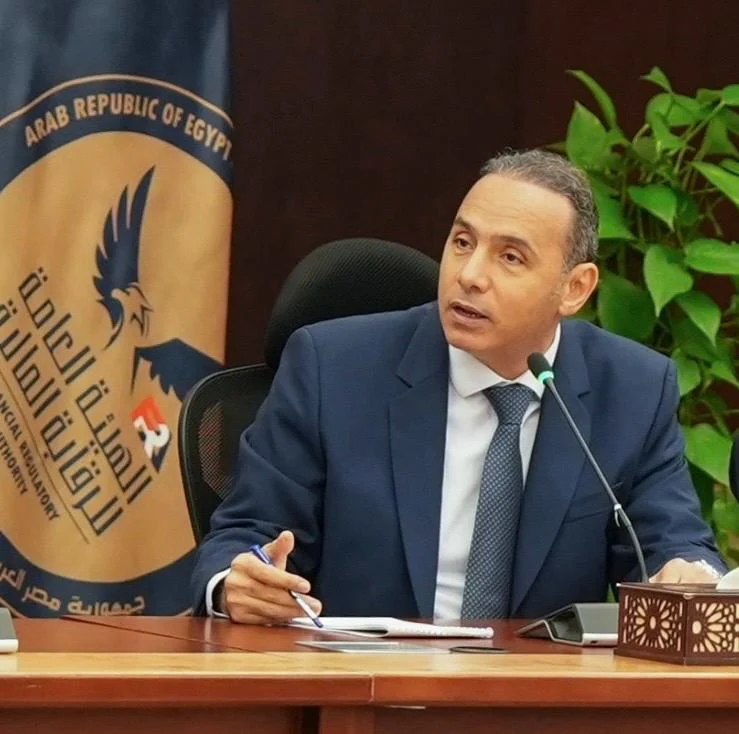
Dr. Islam Azzam, Chairman of the Financial Regulatory Authority (FRA):
- A clear framework for the contractual relationship to facilitate operations for companies and clients, and enhance procedural transparency
- Defining the rights and obligations of both parties, along with controls for managing collateral and closing open positions
- Ongoing public consultation with market stakeholders to finalize regulatory aspects, in parallel with live testing of the central lending system
Dr. Islam Azzam, Chairman of the Financial Regulatory Authority (FRA), has issued a decision regarding the model contract between brokerage firms and borrowing clients. This marks a new step in preparation for the anticipated official launch of the “Short Selling” mechanism (borrowing securities for the purpose of selling / selling borrowed securities) in light of the new regulatory framework recently issued under the FRA Board of Directors' Decree No. (155) of 2026.
The decree aims to establish a clear contractual framework governing the relationship between the borrowing client—who wishes to borrow securities for the purpose of selling, which are available through the central lending system at the Central Depository and Registry company (Misr for Central Clearing, Depository and Registry – MCDR)—and the brokerage firm licensed to conduct operations and acting on behalf of the borrowing client.
The “Short Selling” mechanism is based on the presence of a “lending client” who wishes to lend shares owned by them, and a “borrowing client” who wishes to borrow shares to trade them by selling and subsequently buying them back at a later time and returning them to the lender if they expect the price to decline. Profit is thus realized through the difference between the selling and purchasing prices, based on the investor's expectations of market fluctuations and the security's price, pursuant to an agreement between the investor and a brokerage firm licensed to carry out such operations.
The issuance of the model contract by virtue of the FRA Chairman’s Decree No. (3350) of 2026 came after consultations with market stakeholders to leverage the expertise of companies operating in this activity and determine practical implementation requirements. This reflects the FRA's consistent approach of establishing constructive public dialogue, which helps develop enforceable regulations that strike a balance between facilitating the implementation of the mechanism, managing its risks, and protecting the rights of market participants.
The model contract defines the obligations and rights of both the brokerage firm and the borrowing client, their respective procedural roles, and the regulation of expenses, commissions, and investment returns on collateral margins and their distribution method. This supports the efficient practical implementation of the mechanism, enhances participants' ability to understand the mechanism and its associated risks, monitors margin requirements, and takes necessary measures to close positions when contractually or regulatory specified conditions are met.
The model contract sets controls for managing the risks associated with the transaction, foremost among which is the collateral provided by the borrowing client. The client is obligated to provide a margin of collateral in accordance with the percentages specified in the contract annex prior to the execution of the borrowing transaction, subject to a minimum of the percentages stipulated in the FRA's decree. Meanwhile, the brokerage firm is obligated to deposit the cash collateral in a separate account dedicated to short selling operations.
With the objective of mitigating risks associated with the transaction and safeguarding the rights of market participants, the model contract stipulates that the brokerage firm must revalue the borrowed securities based on the instantaneous closing price during the trading session, and monitor the ratio of total collateral to the value of the borrowed securities in accordance with the percentages specified in the contract annex, subject to a minimum of the percentages stipulated in the decree.
It also regulates procedures for handling cases where borrowed securities are not returned on the specified date, whereby the brokerage firm is obligated to purchase the securities required for the return, taking into account the relevant settlement dates. This applies similarly to position-closing scenarios, including the removal of a security from the list of securities permitted to be traded through the mechanism, and the issuance of regulatory decisions or approvals relating to acquisitions, mergers, purchase offers, divisions, liquidations, or other operations determined by the FRA.
Furthermore, the company must deliver a detailed manual to the client explaining the concept of securities borrowing for the purpose of selling, along with its basic provisions, procedures, benefits, and associated risks. The company must also update this manual whenever any amendments are made to the regulating decrees, and it shall be provided to the client at least once annually and upon each update.
The contract stipulates that the cash collateral margin shall be invested in instruments determined by the FRA throughout the lending period, with the brokerage firm being obligated to notify the client of the investment avenues and actual returns, and to add the return to the client's account upon collection or in accordance with agreed-upon terms.
Regarding the cost of borrowing, the model requires the company to include all expenses, commissions, and other cash amounts deducted from the client, while stating the calculation basis for each. It strictly prohibits any future modification of commissions and expenses except with the explicit consent of the client.
The model guarantees the client the right to issue orders for buying and selling borrowed securities, and to close their open position fully or partially during the borrowing period in accordance with the contract terms.
Dr. Islam Azzam, Chairman of the Financial Regulatory Authority (FRA), stated that the model contract represents a new step toward launching the “Short Selling” mechanism, as the FRA is currently finalizing the regulatory aspects and practical guidelines for all stakeholders of the mechanism. This is being done in parallel with putting the finishing touches on the central lending system prepared and managed by Misr for Central Clearing (MCDR) through live testing, aiming to ensure full, instantaneous integration between the system and brokerage firms, and to document all operational stages and procedures. This allows borrowing clients to view all lending offers available from lending clients and choose what aligns with their investment objectives, as well as allowing lending clients to view all other lending offers registered through the system.
The FRA Chairman added that the model contract aims to facilitate procedures for brokerage firms and borrowing clients, regulates the relationship between them, and unifies the contractual basis in light of the regulatory framework of the mechanism. It also extends to defining responsibilities associated with collateral management, monitoring open positions, and handling cases of declining collateral values or delays in returning borrowed securities, in order to preserve the rights of all parties.
He pointed out the necessity for the contract to include a declaration by the borrowing client confirming that they are the ultimate owner and sole beneficiary of the account opening, that the sources of their funds are legitimate, and that they fulfill the relevant data requirements in accordance with Anti-Money Laundering Law No. (80) of 2002 and regulatory decrees issued regarding anti-money laundering and terrorist financing in non-banking financial activities.
Dr. Islam Azzam clarified that brokerage firms licensed to conduct operations are committed to maintaining data confidentiality, privacy of information, and client documents, and not disclosing information about them or their transactions to third parties without prior written consent and within the limits of such consent, except in cases involving the notification of the FRA with specific data or information, or pursuant to a judicial order in accordance with relevant legislation.
It is worth noting that the borrowing client in the “Short Selling” mechanism profits if their expectations of a price decline in the borrowed securities are met, as they repurchase the securities—realizing a profit margin—and return them to the lender, after deducting the borrowing cost from the profit. Conversely, in the event of an increase in the security's price and the borrower's desire to cut losses, they repurchase the securities—incurring a loss—and return them to the lender, with the borrowing cost added thereto.
In both cases, the lender receives a return resulting from lending their securities that is close to the risk-free rate, in addition to the required return for lending, and other benefits arising from share ownership.