
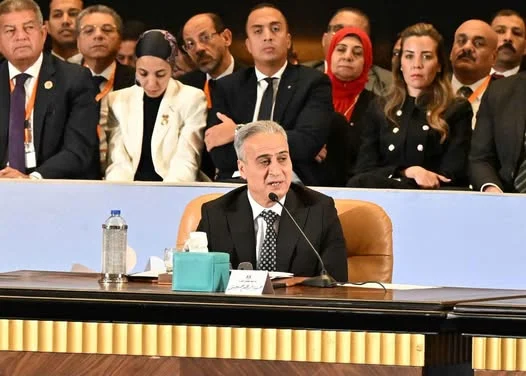
Mohamed Ahmed_ Ibrahim El-Sigini, Head of the Consumer Protection Agency, confirmed the preparation of a proposed package of amendments to Consumer Protection Law No. 181 of 2018, to keep pace with technological developments and the spread of e-commerce, in preparation for submission to the House of Representatives. He pointed out that the Agency aims to reduce the average complaint resolution time to 5 days during the upcoming phase, compared to 8 days currently, after dropping from about 65.5 days in 2018.
El-Sigini explained, during his participation in the session "A More Effective Social Protection System", within the activities of the Egypt 2026 Forum, in the presence of Dr. Mostafa Madbouly, Prime Minister, that consumer protection represents a fundamental pillar for market stability and enhancing fair competition. He affirmed the continuation of the Agency's efforts to combat illicit commercial practices, ensure the availability of goods and the validity of data declared about them, and accelerate the recovery of citizens' rights.
The Head of the Consumer Protection Agency explained that the Agency handled 1,418,815 complaints during the period from 2014 to 2025, of which 1,413,136 complaints were resolved, while the number of incoming complaints increased from about 29,000 complaints in 2014 to 215,000 complaints in 2025.
He pointed out the increase in the number of the Agency's headquarters from 2 headquarters in 2006 to 26 headquarters in 2026, in parallel with the rise in regulatory inspection campaigns from 125 campaigns in 2014 to 9,538 campaigns in 2025, with a total of 46,546 campaigns during the period, including inspections of about 603,000 establishments.
El-Sigini stressed that the success of the consumer protection system is not measured solely by the number of complaints and regulatory campaigns, but rather by its ability to curb the repetition of violations, raise levels of compliance with the law, and achieve tangible results reflected in the lives of citizens.
75 Million Pounds Annual Operating Cost for the Hotline
Regarding the development of communication channels with citizens, El-Sigini explained that the Agency is working on developing the consumer protection hotline number 19588, expanding access to it via mobile phones, while studying sustainable operating alternatives, given that the estimated cost of operating it through outsourced companies has reached about 75 million pounds annually.
He added that the Agency is studying the internal operation of the hotline by relying on its human cadres, in addition to developing automated call distribution systems and converting them into analyzable texts, which contributes to accelerating the response to complaints and improving the quality of services provided to citizens.
Using Artificial Intelligence to Monitor Price Manipulation and Misleading Advertising
The Head of the Consumer Protection Agency affirmed that the Agency is working on employing artificial intelligence techniques to receive complaints, classify them automatically, and refer them to the competent departments, with priority given to complaints with a wide impact.
He added that the Agency aims to analyze the data of complaints, regulatory campaigns, official reports, prices, advertisements, and e-stores to monitor violation patterns, identify the highest-risk sectors and regions, direct regulatory campaigns with greater precision, and detect early indicators of price manipulation or hoarding of goods.
He pointed out the work on establishing a unified electronic system for managing regulatory campaigns and linking the Agency's branches to a central database, which supports information exchange and raises decision-making efficiency, in addition to developing tools for monitoring misleading advertisements, fictitious offers, and anonymous online stores.
He stressed that employing artificial intelligence aims to build a proactive regulatory system that improves resource allocation and accelerates the recovery of consumer rights, while adhering to personal data protection controls, verifying the accuracy of results, and maintaining the pivotal role of the human element in making decisions and legal actions.
El-Sigini revealed the preparation of a proposal to regulate the display of the final retail price to the consumer on products from the moment they leave the factory, ensuring price clarity before purchase, enabling citizens to compare available alternatives, and helping regulatory authorities monitor undisciplined pricing practices.
He explained that the proposal allows the manufacturer to track the price at which its products are offered, provides the merchant with clarity in transactions, and helps the consumer make more informed purchasing decisions.
He emphasized that the proposal does not aim to impose government price controls or determine prices, but rather to enhance price disclosure and transparency, support fair competition, and curb excessive pricing and misleading practices, taking into account production, transportation, and distribution costs, taxes, fees, and market conditions.
The Head of the Consumer Protection Agency stressed the importance of ensuring the availability of goods and confronting illicit practices, foremost among which are selling above the declared price, misleading advertisements, commercial fraud, and hoarding strategic goods.
He explained that Law No. 20 of 2024, amending certain provisions of the Consumer Protection Law, enhanced the penalties prescribed for hoarding strategic goods or refraining from offering them for sale in violation of the law, with the aim of curbing the artificial shortage of supply and achieving illicit gains at the expense of citizens.
He pointed out that the penalties include imprisonment for a period of not less than one year, and a fine of not less than 150,000 pounds and not exceeding 3 million pounds, or the equivalent of the value of the goods subject of the crime, whichever is greater. The penalty for recidivism is escalated to imprisonment from two to five years and doubling the fines within both limits, in addition to seizing and confiscating the goods, and the possibility of closing the shop and revoking its license in accordance with the provisions of the law.
He affirmed that the effectiveness of these measures is linked to the swift monitoring of violations, the continuation of field campaigns, and the enforcement of the law, thereby supporting market discipline and preserving citizens' ability to obtain their basic needs.
El-Sigini explained that the proposed amendments to the Consumer Protection Law aim to address the loopholes revealed by practical application, define the responsibilities of parties in digital transactions, and enhance the confrontation of misleading advertisements, including advertisements via electronic platforms and content creators, in addition to supporting personal data protection and ensuring that the consumer obtains accurate information regarding goods and services.
He added that the proposals include developing remote selling regulations, confirming purchase orders and adherence to the price and contract terms, enhancing mechanisms for proving the delivery and return of goods, and defining responsibilities in shipping and delivery services.
The Head of the Agency confirmed that these amendments are still proposals under preparation and have not yet entered into force, pointing out that their goal is to build a legal framework that keeps pace with modern trading and consumption patterns, enhances consumer confidence, and promotes fair competition.
Regarding the penalties prescribed for violations, El-Sigini explained that Consumer Protection Law No. 181 of 2018 includes a graduated system of fines proportional to the nature and gravity of the violation.
He pointed out that fines reach up to 500,000 pounds for violations including failure to comply with specifications and mandatory data, failure to advertise the comprehensive price or selling above the declared price, and breach of replacement and return rights.
He added that fines reach up to 1 million pounds for violations including failure to issue invoices, breach of warranty conditions, and provision of defective services, while reaching up to 2 million pounds in a number of violations, most notably misleading the consumer and breaching certain legal obligations regulating commercial transactions.
He stressed that the application of penalties aims to enshrine transparency in advertising and pricing, ensure the quality of goods and services, and safeguard citizens' rights, thereby enhancing confidence in the markets and supporting fair competition.