
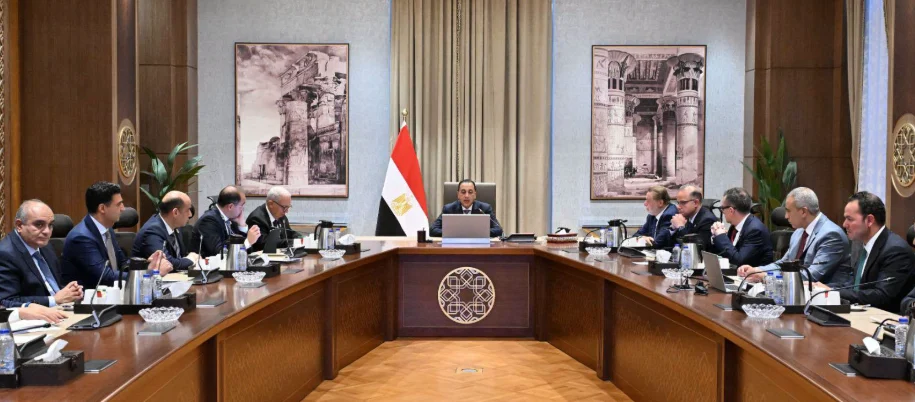
Hapi_ Dr. Mostafa Madbouly, Prime Minister, held a coordination session in preparation for announcing the outlines of the "National Economic Transformation Program" during the "Egypt 2026 Forum", in the presence of Dr. Hussein Issa, Deputy Prime Minister for Economic Affairs; Hassan Abdalla, Governor of the Central Bank of Egypt; Ahmed Kouchouk, Minister of Finance; Dr. Mohamed Farid, Minister of Investment and Foreign Trade; Hassan Raddad, Minister of Labor; Dr. Ahmed Rostom, Minister of Planning and Economic Development; Engineer Khaled Hashem, Minister of Industry; Yasser Sobhi, Deputy Minister of Finance for Fiscal Policies; and officials from the relevant ministries.
Dr. Mostafa Madbouly affirmed that the National Economic Transformation Program comes within the framework of the State's orientation towards adopting an integrated economic vision aimed at enhancing the resilience of the Egyptian economy to achieve sustainable growth through clear priorities and measurable targets, based on an accurate assessment of economic challenges and available opportunities, and establishing the necessary executive mechanisms to achieve the required reforms, which positively reflects on the performance of the national economy and enhances its capability to address regional and international variables and challenges.
The session witnessed a review of the main pillars of the program and a discussion of its implementation mechanisms in light of the importance of enhancing coordination and integration among ministries and concerned entities, achieving consistency among economic, financial, investment, and production policies, which supports the efficient utilization of available resources, raises productivity and export rates, and contributes to achieving the State's objectives in the field of economic development.
The discussions also addressed ways to enhance the role of the private sector as a key partner in achieving economic development and leading growth rates by fostering a competitive and investment-stimulating business environment, expanding the production base, supporting national industry, increasing exports, and attracting further domestic and foreign investments, thereby contributing to diversifying national income sources, providing job opportunities, and enhancing the competitiveness of the Egyptian economy and its ability to achieve sustainable growth.