
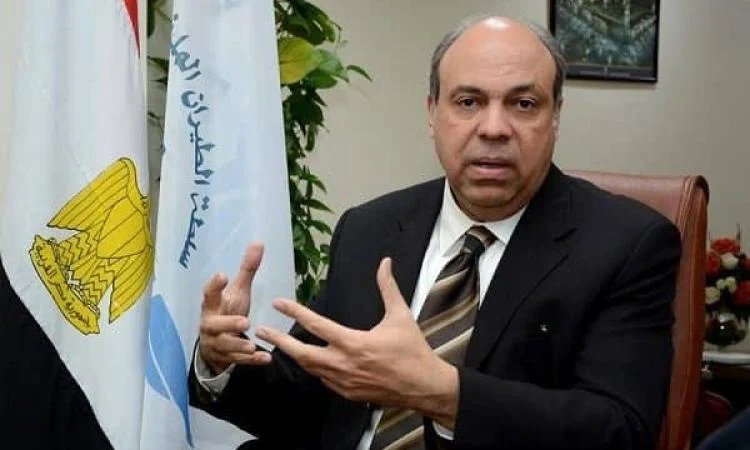
Habi_ Dr. Sameh El-Hefny, Minister of Civil Aviation, participated in the panel discussion titled "Foreign Exchange Resources and Debt Management" during the activities of the Egypt 2026 Forum, held under the auspices of President Abdel Fattah El-Sisi. He reviewed the state's plans for developing Egyptian airports, enhancing air transport capabilities, expanding infrastructure, and modernizing the fleets of national airlines, thereby supporting incoming tourism and boosting the sector's contribution to foreign exchange resources, in accordance with development and expansion targets up to 2030.
The session witnessed the participation of Hassan Abdalla, Governor of the Central Bank of Egypt; Ahmed Kouchouk, Minister of Finance; Dr. Ahmed Rostom, Minister of Planning and Economic Development; Sherif Fathy, Minister of Tourism and Antiquities; Dr. Mohammad Farid Saleh, Minister of Investment and Foreign Trade; and Admiral Osama Rabie, Chairman of the Suez Canal Authority, alongside a select group of experts and specialists. The session was moderated by journalist Dina Salem.
The Minister of Civil Aviation emphasized that the aviation sector represents one of the vital pillars for supporting the national economy and enhancing foreign exchange resources, in light of the crucial role played by Egyptian airports in receiving over 95% of incoming tourism traffic to Egypt. He pointed out that the upcoming phase aims to continue infrastructure development, raise operational efficiency, and expand passenger capacity to keep pace with the expected growth in passenger and aircraft movement, thereby strengthening the sector's ability to achieve sustainable growth.
Investments Exceeding $400 Million to Develop the Egyptian Airspace
El-Hefny explained that the state has invested more than $400 million in developing the Egyptian airspace through modernizing the radar system, satellite networks, and communication systems, as well as restructuring air routes and operational segments. This contributes to increasing the efficiency of air traffic management, achieving greater fluidity and flexibility in routes, and enhancing the attractiveness of Egyptian airspace for international airlines and air transit traffic.
He added that development efforts extend to modernizing the digital infrastructure at airports, expanding the application of modern technological solutions to facilitate travel procedures, improving the passenger experience, and reducing congestion, thereby raising operational efficiency and elevating the level of services provided in accordance with international standards.
Civil Aviation Aims to Raise Airport Capacity to 122 Million Passengers Annually
Regarding expansion plans, the Minister of Civil Aviation pointed out that the current capacity of Egyptian airports is approximately 73 million passengers annually, and the ministry aims to increase it to over 122 million passengers by 2030 through the implementation of development and expansion projects, maximizing the utilization of existing assets, and leveraging private sector expertise in management, operation, and development.
El-Hefny reviewed the evolution of the airport system since 2014, including the development and capacity-enhancement works witnessed at Cairo, Sharm El-Sheikh, Hurghada, Alexandria, El Alamein, St. Catherine, and El Arish airports, alongside the integration of Sphinx, New Capital, Berenice, and Bardawil airports into the civil aviation system, which enhances the deployment of air services and supports tourism and urban development.
He noted that upcoming projects include the development of El Alamein, Sphinx, and New Capital airports, adding approximately 12 million passengers annually to the capacity of Egyptian airports.
Dr. Sameh El-Hefny, Minister of Civil Aviation, stated that the ministry seeks to offer 11 airports to the private sector for management, operation, and development, excluding Cairo International Airport, in cooperation with an international consultant to prepare a strategic study determining the appropriate airports for private sector participation and evaluating suitable offering models, whether through offering each airport individually or as a package of airports.
He explained that Hurghada International Airport represents the pilot project for this experience, as the pre-qualification phase for consortia has been concluded, and the preparation of request-for-proposal documents for the qualified consortia is underway. Additionally, a draft concession contract for the operation, development, and management of Ras El-Hekma Airport is being prepared in preparation for submission to the House of Representatives.
The Minister of Aviation emphasized that Egyptian airports are sovereign state-owned assets and are not for sale, explaining that private sector participation aims to attract foreign direct investments, benefit from modern expertise and technologies, transfer technical and managerial know-how to Egyptian cadres, and alleviate burdens on the general budget, while preserving workers' rights and developing their skills in accordance with international standards.
Regarding Cairo International Airport, the Minister of Civil Aviation clarified that the airport receives more than 31 million passengers annually, despite its current design capacity being 28 million passengers, which reflects the importance of expanding its infrastructure to keep pace with the increase in travel movement.
$4.2 Billion in Estimated Investments to Establish Terminal 4 at Cairo Airport
He noted that work is underway to offer the project for establishing Passenger Terminal 4, with estimated investments of $4.2 billion, as part of a plan aimed at raising the airport's capacity to 70 million passengers annually in the first phase, reaching 110 million passengers annually after 2041.
He added that the ministry is also studying the establishment of an air cargo city and logistics services at Cairo Airport, which supports cargo movement, enhances the sector's logistical capabilities, and solidifies Egypt's position as a hub to serve African and global markets.
Regarding national airlines, El-Hefny affirmed that the ministry is implementing a plan to restructure EgyptAir, enhance its competitive capability, and achieve financial and operational sustainability. He explained that the company has faced accumulated challenges since 2011, exacerbated by exchange rate fluctuations and the repercussions of the COVID-19 pandemic, given that about 80% of its expenses depend on foreign currencies, which led to the accumulation of losses amounting to EGP 31.5 billion.
EgyptAir Aims to Zero Out Its Accumulated Losses Within Two Years and Raise Its Fleet to 200 Aircraft by 2035
He pointed out that the financial, technical, and operational policies applied over the past three years have contributed to achieving the highest levels of profitability in the company's history, reducing its accumulated losses from EGP 31.5 billion to EGP 5.9 billion, with the target of wiping them out completely over the next two years.
He added that EgyptAir has achieved progress in international rankings, reaching 46th place globally according to the "Skytrax" ranking, after previously being outside the ranking list. It has also won international awards, including the "World's Most Improved Airline" award, reflecting the development of its operational and service performance and supporting its position within the "Star Alliance" network.
He pointed out that EgyptAir's fleet modernization plan aims to reach a fleet size of 125 aircraft by 2030, and then 200 aircraft by 2035, in accordance with announced targets, supporting the expansion of the route network and enhancing the ability to meet the growing demand for travel.
Increasing Air Cairo's Fleet to 80 Aircraft by the End of 2029
In parallel, Air Cairo, the low-cost arm of EgyptAir, continues to expand its air fleet, which has grown from 6 aircraft about six years ago to 43 aircraft currently, with a target of reaching 80 aircraft by the end of 2029, and then 134 aircraft by 2034. This supports the expansion of the destination network and enhances air connectivity, particularly through regional airports and tourism attraction areas.
The Minister of Civil Aviation explained that the ministry is working on developing policies, legislation, and incentives regulating air transport, contributing to the revitalization of incoming tourism traffic and the expansion of the air connectivity network with various markets.
He pointed out the facilitation of charter flights coming from various cities around the world to land at Egyptian airports without restrictions, the liberalization of air transport movement at tourism attraction airports, and the taking of measures to encourage private airlines, which contributed to raising their contribution to about 30% of incoming air tourism traffic, aside from EgyptAir's traffic.
The Minister of Civil Aviation concluded his statements by emphasizing that the civil aviation sector possesses promising opportunities to enhance its contribution to the national economy, in light of plans for infrastructure expansion, airport development, airline fleet growth, and the revitalization of tourism and air cargo movement.
$4.8 Billion in Sector Revenues During 2025/2026
He explained that the revenues of the civil aviation sector reached $4.8 billion during 2025/2026, prior to calculating the targeted returns from future expansion plans, reflecting the sector's importance in supporting foreign exchange resources and confirming that the continued development of its operational and investment capabilities represents one of the vital paths to maximizing economic return and enhancing Egypt's competitiveness regionally and internationally.
}