
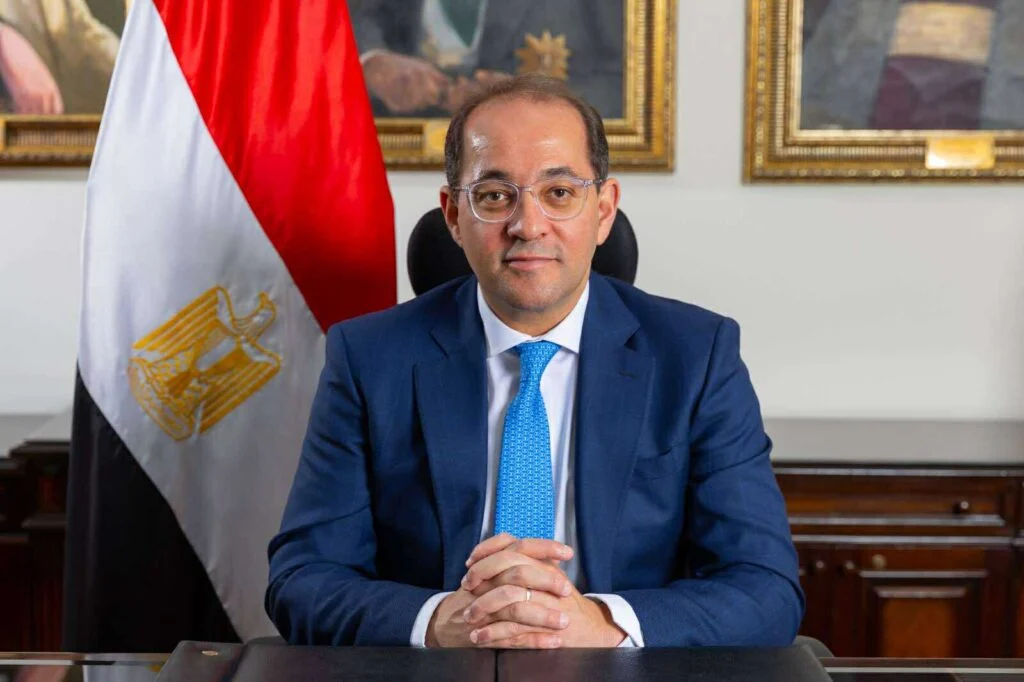
Yara El-Janaghy- Ahmed Kouchouk, Minister of Finance, stated that the government aims to increase the fiscal space available for spending on developmental and social priorities to approximately EGP 4.8 trillion by fiscal year 2029-2030, compared to around EGP 2.3 trillion during fiscal year 2025-2026—more than doubling it—while maintaining public financial sustainability and avoiding imposing additional impactful inflationary or tax burdens on the economy.
Kouchouk added, during his participation in the session titled “Market Control and a More Effective Social Protection System” within the activities of the Egypt 2026 Forum, that the primary challenge lies in providing greater funding for the education, health, human development, and social protection sectors, alongside supporting economic activity, empowering the private sector, and creating job opportunities, without doing so at the expense of public debt or the rights of future generations.
He explained that the intended fiscal space represents the primary expenditures of the general budget, excluding debt service expenses, which include wages, subsidies, social protection, maintenance, procurement of medicines, and investments, as these constitute the expenditure items directly linked to citizens and economic activity.
The Minister of Finance stressed that the government has set three main determinants for increasing fiscal space, foremost among them being the non-imposition of impactful new tax burdens or increasing tax rates, while focusing on broadening the tax base, gradually integrating economic activities into the formal system, and enhancing voluntary compliance through simplifying procedures, automation, and improving services provided to taxpayers.
He pointed out that the government succeeded in increasing the tax revenue-to-GDP ratio by about 1.6 percentage points over two years, from FY2023-2024 to FY2025-2026, without raising tax rates, benefiting from the expansion of automation, facilitating tax procedures, and encouraging new taxpayers to join the system.
He added that the government aims to raise the tax revenue-to-GDP ratio from about 13% to 15% over the next four years, an increase of two percentage points, stressing that achieving this target relies on completing the reforms that contributed to the growth of tax receipts over the past two years.
Kouchouk noted that the second pillar consists of gradually increasing non-tax revenues by about 0.5 percentage points of GDP over the next four years, by maximizing returns achieved from state-owned enterprises, improving the utilization of their assets to enhance public revenues and allocate additional resources for citizens, alongside expanding local resource development, which will top the priorities of the upcoming fiscal year's budget.
He emphasized that the third determinant is increasing fiscal space without creating additional inflationary pressures, through coordination with the Central Bank of Egypt (CBE) and maintaining a downward trajectory for inflation while approaching its targets of around 8%, thereby allowing room for further interest rate cuts, enhancing the capacity of the Egyptian economy and industrial sector to expand, as well as reducing government borrowing costs.
He explained that declining interest rates would contribute to reducing debt service costs by an equivalent of approximately 2 to 2.5 percentage points of GDP, providing additional resources for the general budget that can be directed toward developmental and social spending, in parallel with reducing government financing needs and curbing price pressures.
The Minister of Finance confirmed that the government aims to reduce the debt-to-GDP ratio to less than 70% by 2030, concurrently with expanding expenditure on priority sectors, noting that achieving tax and non-tax revenue targets, alongside declining inflation and interest rates, would support increasing fiscal space to EGP 4.8 trillion by 2029-2030, while continuing to reduce debt burdens and improve fiscal sustainability indicators.
He added that the government is working to incorporate these targets within its various programs to ensure the provision of necessary funding for social protection, health, and education, alongside supporting economic empowerment, employment, and job creation.