
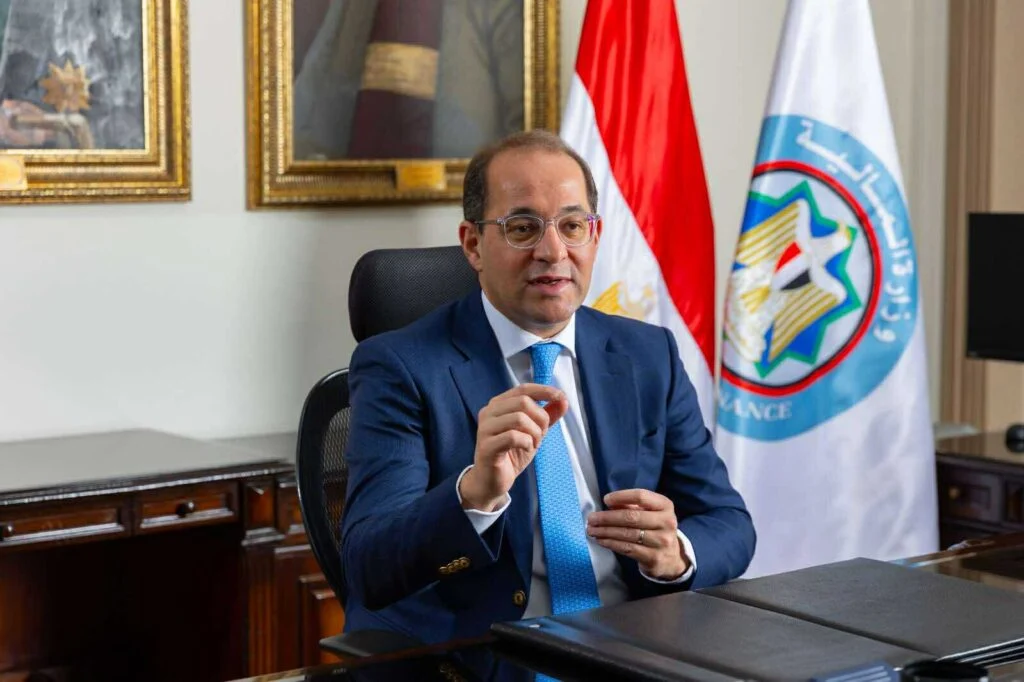
Yara El-Gannainy_ Ahmed Kouchouk, Minister of Finance, affirmed that the state budget agencies have succeeded in reducing external debt by about $6 billion over the past three years, as part of a directive aimed at paying off external obligations exceeding new borrowing, stressing the importance of establishing flexible debt ceilings and clear indicators for its sustainability, balancing developmental ambitions with available financing capacities.
During his participation in the “Foreign Exchange Resources and Debt Management” session within the activities of the Egypt 2026 Forum, Kouchouk stated that dealing with local and external debt burdens becomes more difficult in the absence of strong economic growth rates, explaining that the economy's capacity to expand and increase its productivity represents a pivotal factor in improving debt indicators and enhancing the ability to service it, whether the debt balance rises or falls.
He added that the priority for the Egyptian economy is to develop local and foreign currency resources and expand the financing base, rather than being limited to rationalizing spending, pointing out that the economy needs additional resource inflows.
The Minister of Finance pointed out that enhancing the role of the private sector, both locally and foreign, represents one of the important pathways to bridge financing gaps and provide additional resources for the economy, allowing greater space to implement developmental targets.
Kouchouk stressed the importance of setting debt ceilings to govern debt management and take into account the state's actual financing capacities, explaining that coordination between entities concerned with economic policies, despite its importance, needs to be complemented by clear targets that allow movement towards achieving developmental priorities without exceeding available capabilities.
He explained that setting debt ceilings does not necessarily mean setting fixed numerical limits for debt balances, as other indicators can be relied upon, including the ratio of external debt service to the proceeds of commodity and service exports, which helps assess the economy's ability to fulfill its external obligations sustainably.
He added that reducing the external debt of budget agencies was not an annual target that must be achieved with the same value every year, but rather forms part of an integrated vision for debt management, noting that the volume of reduction varied from one year to another according to economic and financial conditions.
He pointed out that reducing external debt remains an important element within public debt management, even if it is not an independent primary target similar to the primary surplus, overall deficit, and public debt with its local and external components.
He affirmed that fiscal policy over the past three years coincided with an improvement in a number of economic indicators, including higher growth and private investment rates, and an increase in foreign exchange reserves, reflecting the importance of combining debt management with supporting economic activity.
Kouchouk noted the necessity of adopting financial and economic targets extending beyond a single fiscal year, explaining that preparing the new budget in coordination with the Ministry of Planning included developing a plan for the next year, alongside indicative estimates for the following three years, clarifying the path of economic policies and helping in early planning for financing needs.
The Minister of Finance praised the Central Bank of Egypt's shift towards exchange rate flexibility, describing it as a fundamental reform for the Egyptian economy, due to its support for confidence in the economy and enhancing the credibility of the economic reform program before international institutions and fora, in parallel with other economic measures.
He explained that exchange rate flexibility provides initial protection for the economy against external shocks, and grants the state a time window to move and implement additional measures to enhance economic stability, stressing that this mechanism alone cannot provide complete protection from various challenges.
Kouchouk stressed the necessity of preserving the gains of the exchange rate reform and the concerted efforts of the concerned entities to support it, in parallel with working to develop foreign exchange resources.