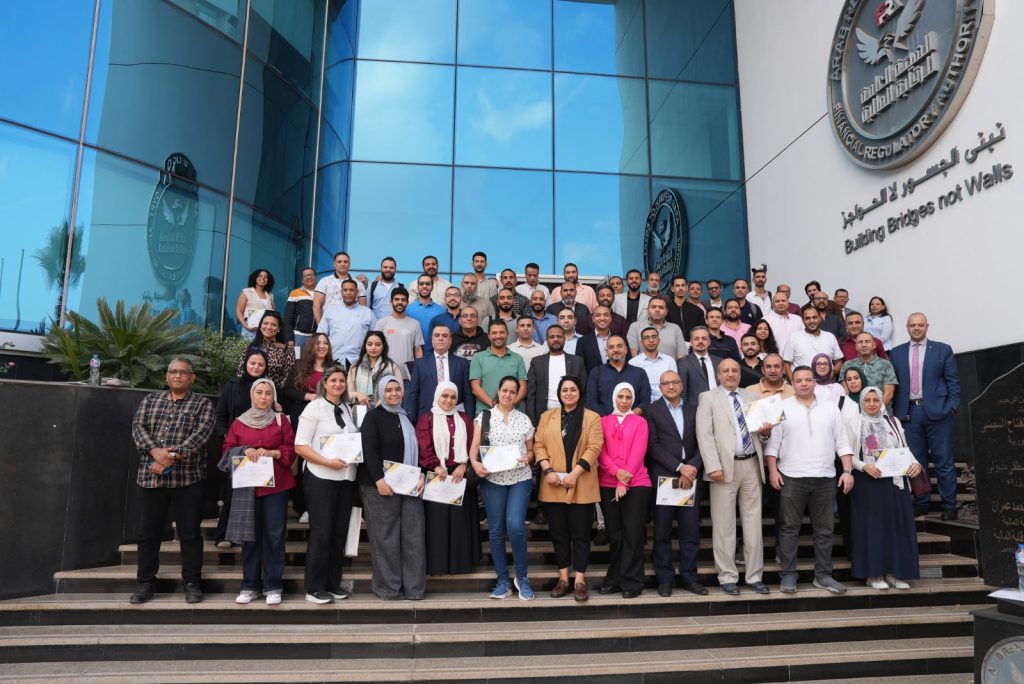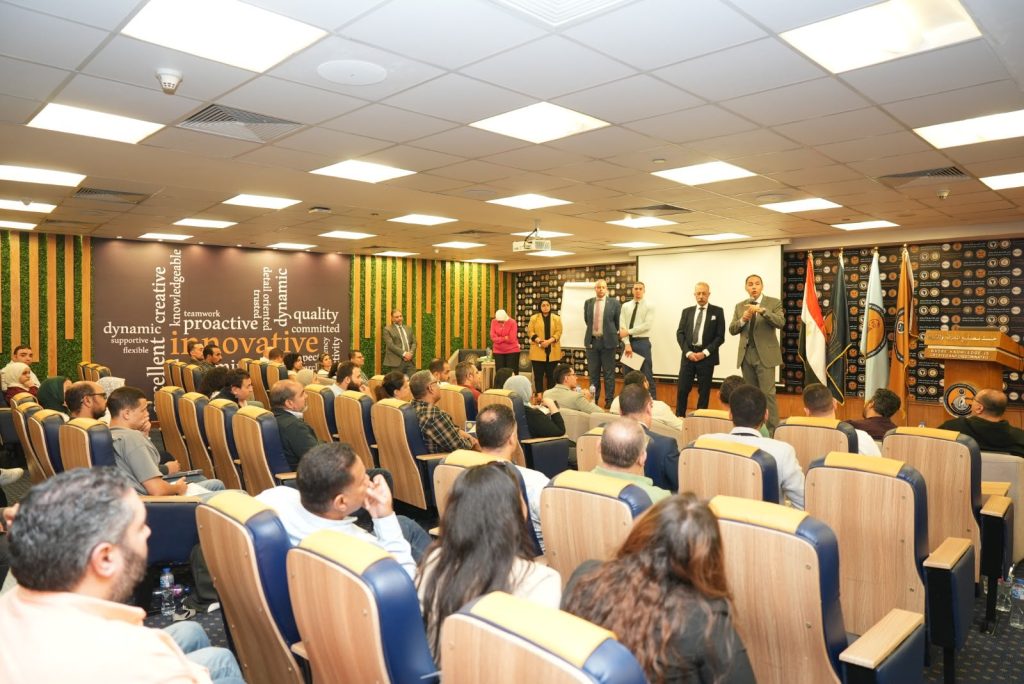
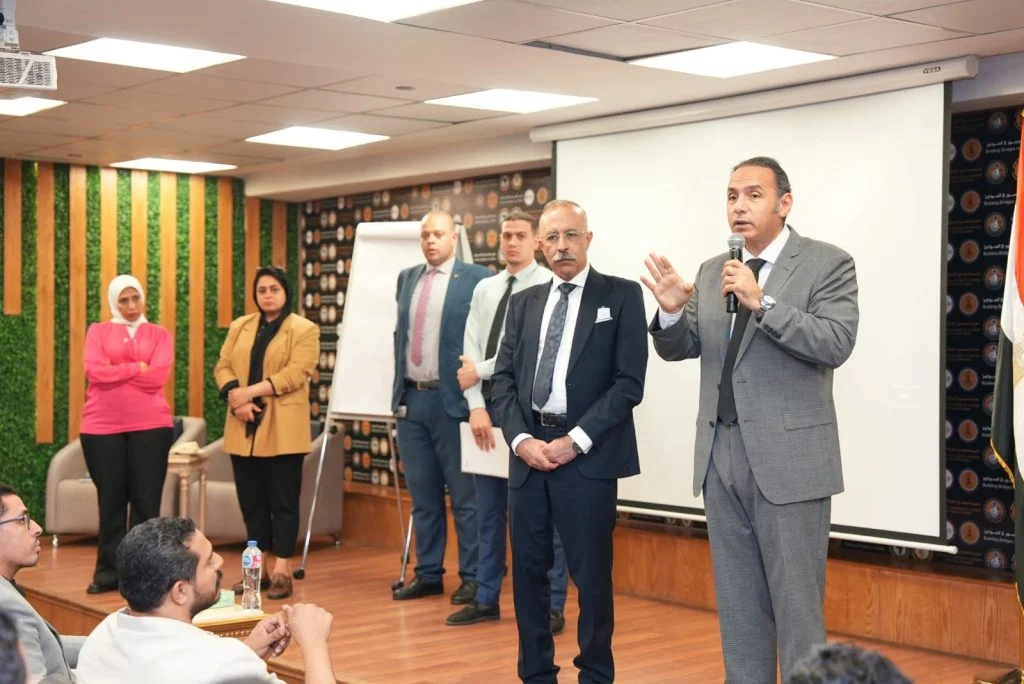
The program aimed to familiarize participants with the controls of the new regulatory framework, technical requirements, and the rights and obligations of each party.
Dr. Islam Azzam, Chairman of the Financial Regulatory Authority (FRA):
– The program is part of the Authority's plan for capacity building and enhancing technical and regulatory readiness for the implementation of the mechanism.
– Passing the program is a primary condition for companies wishing to obtain a license to practice securities borrowing for the purpose of selling operations.
The Financial Regulatory Authority (FRA), chaired by Dr. Islam Azzam, organized the first-of-its-kind training program to prepare and qualify cadres of brokerage companies and financial institutions on the new regulatory and operational framework for the “Short Selling” mechanism (securities borrowing for the purpose of selling / selling borrowed securities) in light of the FRA Board of Directors' Decree No. (155) of 2026.
The program was executed by the Financial Services Institute, the training arm of the FRA, with the participation of lecturers Ms. Hanan Hamdy and Mr. Amr El-Saoudi. More than 100 trainees from 42 brokerage companies and financial institutions received training to work as officers responsible for executing and monitoring “Short Selling” operations.
The decree regulating the mechanism requires every brokerage company wishing to obtain a license to practice the operations to have at least one officer specialized in “Short Selling” operations and monitoring them, who meets a set of conditions including passing the tests or training programs determined by the FRA, in order to provide these officers with complete practical knowledge of the regulatory framework and clarify the roles and responsibilities assigned to each party, thereby supporting companies' readiness to regularize their positions and fulfill the necessary regulatory and technical requirements.
The program aimed to enhance participants' understanding of the controls for implementing the mechanism, managing collateral, monitoring coverage ratios, settling valuation differences, closing open positions, and returning borrowed securities, in addition to relevant technical and supervisory requirements.
The program provided a detailed explanation of the provisions and controls of the new regulatory framework for “Short Selling”, distributed across 13 axes: the general framework of the mechanism, the new central lending system, conditions and controls for practicing operations, obligations and rights of both the brokerage company and the borrowing client, the role of the Central Depository and Registry Company (Misr For Clearing, Settlement and Depository – MCDR), lending and borrowing limits and ratios, the role of the custodian, making securities available and managing collateral, closing borrowing positions and returning securities, rights and benefits associated with corporate actions, direct contracts between the brokerage company and the lending or borrowing client, technical and supervisory requirements, and finally, the model guidance contract between the brokerage company and the borrowing client recently issued by the FRA Chairman's Decree No. (3350) of 2026.
Dr. Islam Azzam, Chairman of the Financial Regulatory Authority (FRA), stated that the training program is considered a new executive step towards launching “Short Selling”, as the FRA continues to finalize the regulatory aspects and practical guidelines for all parties of the mechanism to enhance technical and regulatory readiness, in parallel with putting the finishing touches on the central lending system prepared and managed by MCDR through live testing.
He added that the training program for cadres does not merely represent a fundamental condition for licensing brokerage companies wishing to practice “Short Selling” operations and raising the efficiency of all parties to the mechanism, but also represents one of the pillars of the awareness and capacity-building plan implemented by the FRA to ensure the optimal launch of the mechanism and achieve its desired impacts on the capital market.
The FRA had previously broadcasted via its official website, social media accounts, and YouTube a comprehensive lecture directed at investors and specialists, delivered by Dr. Islam Azzam on the elements of “Short Selling”, its positives, the details of the obligations of the process parties (the lender, the borrower, brokerage companies, MCDR, and custodians), and how the new central lending system works, which documents in real-time all stages and work procedures by allowing borrowing clients to view all lending offers available from lending clients and choose what aligns with their investment objectives, as well as allowing the lending client to view all other lending offers registered through the system.
The FRA also published via its official accounts a number of videos and awareness posts about “Short Selling”, the nature of financial returns, their investment and distribution, the difference between this mechanism and margin trading operations, and the positives of combining both mechanisms on the Egyptian Exchange (EGX) at the level of pricing efficiency and market revitalization.
It is worth noting that the borrowing client in the “Short Selling” mechanism profits in the event that their expectations of a decline in the price of the borrowed securities are met, as they repurchase them, realizing the profit margin, and return them to the lender, provided that the borrowing cost is deducted from the profit. In the event of an increase in the price of the security and the borrower's desire to cut their losses, they repurchase it, incurring a loss, and return it to the lender, with the borrowing cost added to it. In both cases, the lender receives a return as a result of lending their securities, which is close to the risk-free rate, in addition to the required return for lending, and other benefits resulting from their ownership of the shares.