
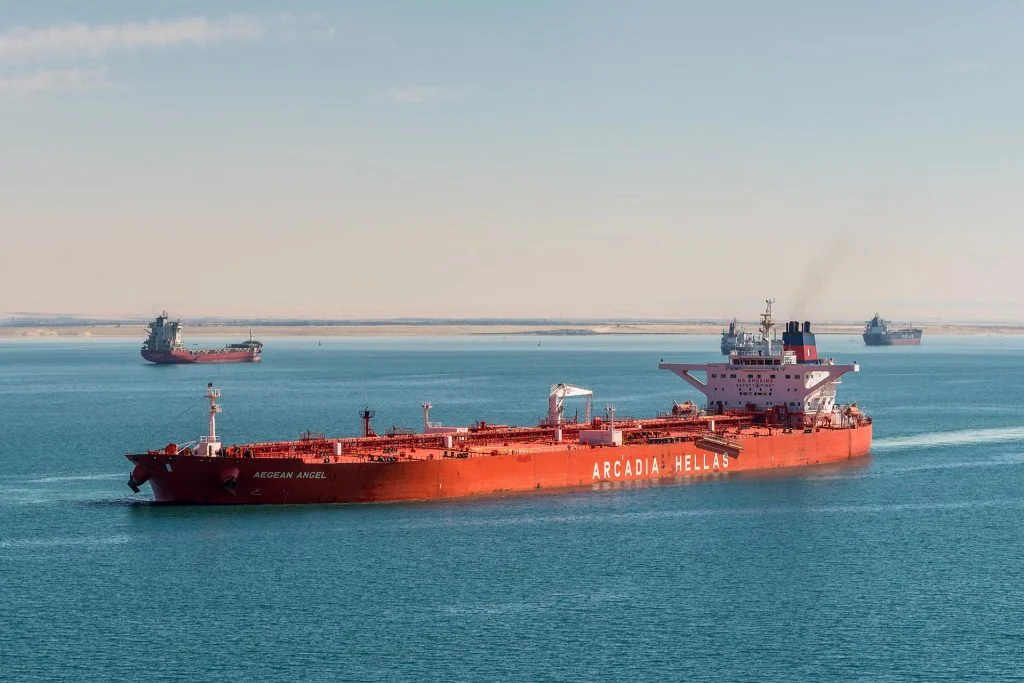
The Ministry of Petroleum intends to import around 15 million barrels of crude oil during the current quarter, an 8% year-on-year increase, with payment to be settled via supplier credit facilities, according to Al Arabiya, citing an undisclosed government official. The cost of shipments will range between USD 1.4 billion and USD 1.5 billion amid continuing high oil prices due to regional tensions, translating to approximately USD 93 to USD 100 per barrel, according to our calculations.
Shipments are concentrated at the beginning of the quarter; 6 million barrels are scheduled for delivery in October, and 4.5 million barrels in each of November and December from Saudi Arabia, Libya, Greece, and other markets, with the Egyptian General Petroleum Corporation (EGPC) settling their value through short- and medium-term credit facilities, according to the official.
The government is betting on increasing domestic refining to reduce the fuel import bill; domestic refineries cover between 70% and 80% of fuel demand, while imports cover the remainder, according to the official. Minister of Petroleum Karim Badawi had announced last September an increase in refinery utilization rates to over 80%, up from 66%. The ministry aims to reduce petroleum product imports, excluding gas and crude oil, to USD 3.6 billion this year from USD 6.2 billion in FY 2025-2026, estimating refinery upgrade costs at around USD 4.5 billion. A government official also told us at the time that the total target for the refining and petrochemical sectors stands at USD 5.2 billion.
The shift from importing fuel to importing crude oil is already evident in trade data. Crude oil imports rose by USD 1.9 billion in FY 2025-2026, while petroleum product imports dropped by USD 1.2 billion. Natural gas was the main driver of the increased petroleum import bill, with its imports rising by USD 4.7 billion, while the petroleum trade deficit widened by 31.5% to reach USD 18.3 billion. Domestic crude oil production is recovering slowly, currently standing at around 527 thousand barrels per day of crude oil and condensates, compared to roughly 449 thousand barrels per day had the ministry not implemented its measures—chief among them settling dues owed to foreign partners. The ministry targets reaching 750 thousand barrels per day by 2030, according to statements made by Badawi at the Egypt Forum last week.
The Other Side of the Equation
US-based Apache Corporation plans to connect 5 new wells across its Western Desert concessions during Q1 2027 with total investments of around USD 30 million, adding approximately 70 million cubic feet per day, equivalent to 12.7% of its current production in Egypt of 550 million cubic feet per day, according to Asharq Business, citing an undisclosed government official. A well in the Tareq field is set to add 12 million cubic feet per day in late January, while wells in Abu Gharadig, Tareq, and Salam fields will add 35 million cubic feet per day in February, followed by additional wells in Tareq and Salam fields adding another 23 million cubic feet per day in March.
These additional volumes appear modest compared to the decline they aim to offset; the same official estimates the natural production decline rate at around 120 million cubic feet per day each month, meaning the five wells offset slightly more than half of a single month's losses, while average demand stands at 6.2 billion cubic feet per day, peaking in summer at around 7.5 billion cubic feet per day. Separately, the ministry aims to add around 330 million cubic feet per day of new supplies by year-end, mostly coming from the Zohr and West Meleh fields. However, these wells represent a near-term stopgap, as Egypt's largest anticipated new gas volumes will come from Cyprus.
Long-Term Gas
Italian firm Eni signed last Monday the main Engineering, Procurement, Construction, and Drilling (EPC&D) contracts for the Cronos field offshore Cyprus, moving the project into the execution phase, with target gas production starting in H1 2028 and reaching a plateau production level of up to 500 million cubic feet per day, according to a company press release. Additionally, the Wall Street Journal quoted informed sources prior to the signing, stating that the total value of the contracts is expected to range between USD 1.3 billion and USD 1.8 billion.
The gas will be transported via an offshore pipeline to processing facilities at the Zohr field, and then through a 40-kilometer onshore pipeline to Damietta for liquefaction and re-export to Europe. However, this gas will not enter the national grid, as Cairo is leasing its unutilized processing and liquefaction capacities, acting merely as a transit hub rather than adding new quantities to the domestic market.
Enterprise covered in its "Taqaat" series last September what is required for reviving the upstream exploration and production sector.