
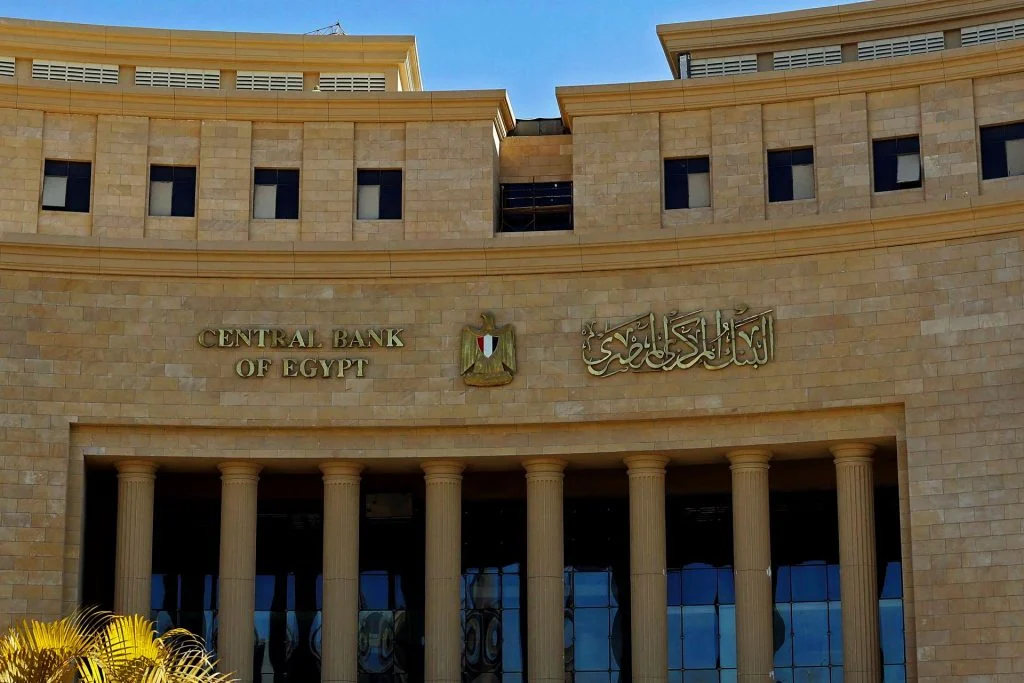
Goldman Sachs expects the Central Bank of Egypt (CBE) to keep its overnight deposit rate unchanged at 20% until late Q1 2027, before resuming its monetary easing cycle, according to a research note reviewed by Enterprise Morning News. Once the easing cycle begins, the bank projects interest rate cuts of 500 basis points in 2027, followed by an additional 200 basis points in 2028, reaching 15% by end-2027 and 13% in 2028—a trajectory confirmed by Farouk Soussa, Senior Economist at Goldman Sachs, in comments to Enterprise Morning News. This represents a slower pace of cuts compared to the bank's September forecast, which projected interest rates to decline to 14% by end-2027, while the 13% level aligns with its estimate of Egypt's neutral interest rate—the level that neither stimulates nor restricts economic growth.
The investment bank bases its projections on its reading of the CBE's decision to raise interest rates by 100 basis points on October 29, the first rate hike since March 2024, treating it as a precautionary measure to curb pressure on the EGP and bolster investor confidence, rather than the beginning of a prolonged monetary tightening cycle. This move ended a monetary easing cycle that started in April 2025 and saw cumulative rate cuts of 825 basis points. Meanwhile, the CBE, which described the rate hike as preemptive, postponed the target timeline for achieving its 7% (±2 percentage points) inflation target to Q4 2027. A separate market report issued by Goldman Sachs, also seen by Enterprise, noted that monetary policymakers favored raising interest rates over intervening in the foreign exchange market, as they shifted toward inflation targeting.
Room for Easing
Inflation data provides the CBE with this room, as headline inflation slowed from 15.2% in March to 12.7% in October, supported by a favorable base effect in the housing component and stable food prices, according to Goldman Sachs. The bank expects a slight rebound in inflation to around 14% by the end of the current year, before gradually decelerating in early 2027, projecting it to average 11.1% in FY2026/2027 (down from a previous forecast of 12.5%) and 9.3% in FY2027/2028. However, this trajectory assumes stable regional conditions, as the bank notes that any new escalation in regional conflict or a surge in energy prices would likely push the CBE toward further monetary tightening and delayed rate cuts.
Monetary tightening comes at a cost, as Goldman Sachs expects GDP growth to slow from 5.1% in FY2025/2026 to 4.5% in FY2026/2027, weighed down by tight monetary conditions and external headwinds, before accelerating to 6.5% in FY2027/2028 and stabilizing at 6% starting from FY2028/2029.
External Risks Remain the Main Constraint
Goldman Sachs does not foresee an external financing gap through FY2029/2030 absent a major regional conflict, amid sustained growth in foreign exchange reserves and net foreign assets across Egyptian banks, supported by rising tourism revenues, worker remittances, and a continued recovery in Suez Canal receipts. However, it views risks as increasingly tilted to the downside through three key channels: a higher LNG import bill should Israeli gas supplies be disrupted, lower tourism revenues in the event of heightened security concerns, and further portfolio capital outflows from Egypt's debt market. Under a downside scenario, these factors could widen the current account deficit and erode foreign exchange buffers.
Portfolio outflows represent the most pressing risk among the three, as Goldman Sachs estimates foreign holdings of EGP-denominated debt instruments at approximately USD 20 billion, down from around USD 30 billion at end-September. The bank believes that recent sell-offs reduced open positions, but holdings remain substantial enough for additional outflows to pressure the EGP.
Underlying Value in the EGP
Nevertheless, Goldman Sachs remains optimistic regarding the EGP, which lost over 5% against the USD in October to trade near EGP 55/USD. The bank's valuation model suggests that the EGP is trading at more than 30% below its fair value, making it one of the most undervalued currencies among the frontier markets covered by the bank. However, a sustained move of the EGP toward its fair value would require greater market confidence in the de-escalation of regional tensions. The bank currently forecasts the USD exchange rate at EGP 53, 52, and 50 over 3, 6, and 12 months, respectively, compared to its previous projections of EGP 49, 48, and 46, noting that the EGP is expected to remain closely linked to oil prices.
This brings us to the International Monetary Fund (IMF), where Goldman Sachs considers external risks to reinforce the need for a new IMF program following the expiration of the current Extended Fund Facility (EFF) on December 15, to ensure foreign financing supply and anchor the credibility of the state's monetary and fiscal policies.
What's Next? The CBE's Monetary Policy Committee will hold its final meeting of this year on December 17, two days after the expiration of the IMF program.